
Description
GOST Flanges
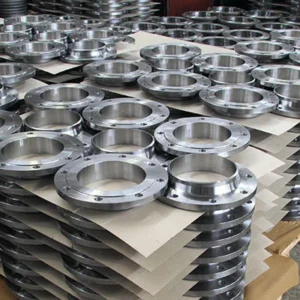
GOST Flanges are industrial piping components manufactured according to applicable GOST standards and used to create bolted connections between pipes, valves, pumps, fittings, vessels and other equipment. GOST standards are associated with the Russian and broader interstate standardization system and are encountered in industrial projects where Russian, CIS or project-specific GOST requirements apply.
Flanges are important components in piping systems because they provide detachable connections. Unlike permanent welded connections, a flanged joint can be opened for inspection, maintenance, equipment replacement and pipeline modification.
The term GOST flange can cover different standards and flange configurations. Therefore, buyers should always identify the exact GOST standard, nominal diameter, pressure rating, flange type, material and facing before ordering.
For international projects, it is also important to distinguish GOST requirements from EN, DIN, ASME and other flange standards. Similar nominal sizes do not automatically mean that two flange standards are interchangeable.
GOST Flanges
GOST Flanges are designed for piping systems where the applicable project specification requires a GOST-standard flange.
These flanges can be used to connect:
- Pipes
- Valves
- Pumps
- Fittings
- Pressure equipment
- Pipeline components
- Industrial machinery
- Tanks and vessels
The specific dimensions and design requirements depend on the applicable GOST standard.
When purchasing GOST flanges, buyers should provide the complete technical designation rather than simply requesting a “GOST flange.”
Important information includes:
- Applicable GOST standard
- Nominal diameter
- Pressure rating
- Flange type
- Material
- Facing
- Bolt-hole arrangement
- Quantity
- Inspection requirements
GOST Flange
A GOST Flange provides a standardized bolted connection for industrial piping systems.
A typical flange joint consists of:
- Flange
- Gasket
- Bolting
- Mating flange or equipment connection
The gasket provides the sealing interface while bolts provide the required clamping force.
Correct selection of the flange is essential because the applicable GOST standard determines important dimensional and design characteristics.
Before ordering, engineers should verify:
- Pipe outside diameter
- Nominal diameter
- Pressure rating
- Bolt-hole pattern
- Flange thickness
- Facing
- Material
- Operating conditions
GOST Steel Flange
A GOST Steel Flange is a steel flange manufactured according to the applicable GOST requirements.
Steel flanges can be used in many industrial piping environments because different steel grades can be selected according to the service conditions.
Material selection should consider:
- Operating temperature
- Operating pressure
- Fluid characteristics
- Corrosion conditions
- Mechanical requirements
- Welding requirements
- Project specifications
The exact material grade should be specified by the project rather than assumed from the term “GOST steel flange.”
For critical applications, buyers may also require material certificates, inspection reports and traceability documentation.
GOST Pipe Flange
A GOST Pipe Flange connects pipe sections to valves, pumps, fittings and other piping equipment.
Flanged connections are particularly useful where components need to be removed periodically for maintenance.
Important advantages include:
- Easy component removal
- Convenient maintenance
- Standardized connection
- Equipment integration
- Replacement flexibility
- Suitable bolted connection
The flange must be compatible with the pipe and mating component in terms of dimensions and pressure classification.
GOST Standard Flange
A GOST Standard Flange refers to a flange manufactured according to a specified GOST standard.
There is no single universal GOST flange dimension covering every industrial application. Different GOST standards can address different flange types, pressure categories, dimensions and applications.
Therefore, procurement teams should identify the exact standard mentioned in the engineering documentation.
The purchase specification should ideally include:
- GOST standard number
- Standard edition if applicable
- Nominal diameter
- Pressure rating
- Flange design
- Material
- Facing
- Quantity
- Inspection requirements
This approach helps prevent confusion during international procurement.
Russian Standard Flange
A Russian Standard Flange is commonly used to describe flange products manufactured according to applicable Russian or GOST specifications.
Such flanges may be encountered in:
- Oil and gas projects
- Petrochemical facilities
- Power plants
- Chemical plants
- Water infrastructure
- Industrial process systems
- Pipeline projects
- Heavy engineering
However, the phrase “Russian Standard Flange” is broad. The exact GOST standard should always be confirmed before manufacturing or purchasing.
GOST Flange Manufacturer
Choosing a capable GOST Flange Manufacturer is important when a project requires specific Russian or interstate standard dimensions.
A manufacturer should be able to review the exact technical requirement and produce or source the requested flange configuration.
When evaluating a manufacturer, buyers can consider:
- Experience with GOST specifications
- Manufacturing capability
- Dimensional inspection
- Material verification
- Product marking
- Traceability
- Quality documentation
- Inspection procedures
- Export packaging
Masiva Metals can be approached for GOST flange sourcing requirements when customers provide the complete technical specification.
GOST Flange Supplier
A reliable GOST Flange Supplier should understand that GOST flange procurement requires more information than nominal pipe diameter alone.
The buyer should communicate:
- GOST standard
- Nominal diameter
- Pressure rating
- Flange type
- Material
- Facing
- Quantity
- Inspection requirements
- Documentation requirements
- Destination
This allows the supplier to identify the appropriate product configuration and reduce the risk of dimensional mismatch.
Industrial GOST Flanges
Industrial GOST Flanges can be used in industrial piping systems where the applicable GOST specification is required.
Potential applications include:
- Oil and gas facilities
- Petrochemical plants
- Chemical processing
- Power generation
- Water treatment
- Industrial utilities
- Pipeline systems
- Manufacturing facilities
- Process plants
- Heavy engineering projects
The actual suitability of a flange depends on its standard, material, pressure rating, temperature and service conditions.
GOST Flange Fittings
GOST Flange Fittings are used together with compatible piping components to create standardized connections.
They can be used around:
- Valves
- Pumps
- Pipe fittings
- Equipment nozzles
- Pipeline assemblies
- Pressure vessels
- Storage systems
When assembling a GOST flange connection, all components should be checked for compatibility.
Important considerations include:
- Flange standard
- Dimensions
- Pressure rating
- Gasket
- Bolting
- Facing
- Pipe size
Different standards should not be mixed without confirming dimensional and engineering compatibility.
GOST Flange Manufacturer in Italy & Belgium
A GOST Flange Manufacturer in Italy & Belgium can support international industrial projects where Russian or GOST-standard flange requirements are specified.
Before ordering, project teams should provide:
- Exact GOST standard
- Nominal size
- Pressure rating
- Material
- Flange type
- Facing
- Quantity
- Inspection requirements
Technical drawings are useful when the flange is intended to replace an existing component.
Masiva Metals can be approached for project-specific GOST flange sourcing requirements.
GOST Flange Supplier in UAE
A GOST Flange Supplier in UAE can support industrial and infrastructure projects where GOST-standard piping components are required.
For accurate procurement, the supplier should receive the exact technical designation.
Buyers should verify:
- Standard
- Size
- Pressure rating
- Material
- Flange type
- Dimensions
- Documentation
This is especially important when GOST flanges are being connected to equipment manufactured under another standard.
GOST Flange Manufacturer in Spain
A GOST Flange Manufacturer in Spain may be required for projects involving Russian-standard equipment, pipelines or industrial machinery.
The manufacturer should receive the complete project specification.
Key information includes:
- GOST standard
- Nominal diameter
- Pressure class
- Material
- Flange type
- Facing
- Quantity
- Inspection requirements
Confirming these details before production can help reduce procurement errors.
GOST Flange Supplier in Germany & South Korea
A GOST Flange Supplier in Germany & South Korea can support international projects that require GOST-standard flange components.
Because GOST, DIN, EN and ASME systems can use different dimensions, buyers should verify the complete connection arrangement.
Important checks include:
- Outside diameter
- Bolt-circle diameter
- Number of bolt holes
- Bolt-hole diameter
- Flange thickness
- Facing
- Pressure designation
Nominal pipe size alone should not be used to determine interchangeability.
GOST Flange Manufacturer in Italy
A GOST Flange Manufacturer in Italy can support industrial projects requiring GOST-standard flange components.
When submitting an inquiry, customers should provide the exact GOST standard and complete dimensional requirements.
If the flange is a replacement component, providing an existing drawing or dimensional inspection report can help with accurate product identification.
GOST Flange Supplier in Belgium
A GOST Flange Supplier in Belgium should be able to review the complete technical specification before quoting the product.
Customers should clearly identify:
- Standard
- Size
- Pressure rating
- Material
- Flange type
- Facing
- Quantity
- Documentation
This information is particularly important for international procurement where the existing piping system may use GOST dimensions.
GOST Flange Manufacturer in Germany
A GOST Flange Manufacturer in Germany can be relevant for industrial projects that require Russian or GOST-standard piping components.
Buyers should not assume that a DIN or EN flange can automatically replace a GOST flange.
The applicable engineering specification should determine the required standard and dimensions.
GOST Flange Supplier in Vietnam & Philippines
A GOST Flange Supplier in Vietnam & Philippines can support international projects requiring GOST-standard flange products.
For efficient sourcing, customers should provide:
- Exact GOST standard
- Nominal size
- Pressure rating
- Material
- Flange configuration
- Facing
- Quantity
- Inspection requirements
- Delivery destination
This enables the supplier to evaluate the complete requirement.
GOST Flange Manufacturer in Saudi Arabia & UAE
A GOST Flange Manufacturer in Saudi Arabia & UAE can support projects where GOST-standard piping components are specified.
The buyer should confirm the exact GOST designation before ordering.
For industrial applications, the technical inquiry should include:
- Standard
- Size
- Pressure rating
- Material
- Flange type
- Facing
- Quantity
- Quality requirements
- Documentation
- Delivery requirements
Masiva Metals can be approached for international GOST flange sourcing requirements.
Types of GOST Flanges
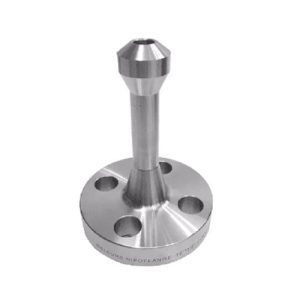
The exact types available depend on the applicable GOST standard. Common industrial flange arrangements can include different designs for welding, bolting, equipment connections and pipeline termination.
Potential configurations may include:
Welding Flanges
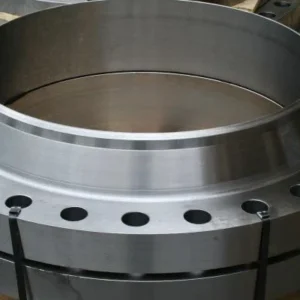
Welding flange designs are attached to pipes through welding and are commonly used where a permanent pipe-to-flange connection is required.
Blind Flanges
Blind flanges close the end of a pipeline or equipment nozzle. They can be removed later for maintenance or system modification.
Threaded Flanges
Threaded designs can be used with compatible threaded piping arrangements where permitted by the applicable standard and project design.
Loose Flanges
Loose flange arrangements can provide installation and alignment advantages in suitable piping systems.
Flat Flanges
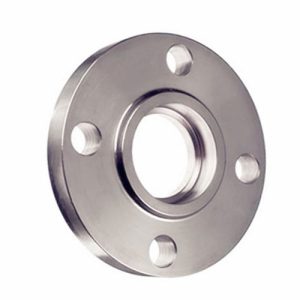
Flat flange designs provide a flange face for bolted connections and are selected according to the applicable GOST specification.
The exact designation, dimensions and application should always be verified against the required GOST standard.
GOST Flange Applications
GOST flanges can be used in numerous industrial applications where the applicable standard is specified.
Typical sectors include:
- Oil and gas
- Petrochemical
- Chemical processing
- Power generation
- Water treatment
- Industrial utilities
- Pipeline transportation
- Manufacturing
- Heavy engineering
- Process industries
The flange’s actual suitability depends on material, pressure, temperature, fluid and applicable standard.
Benefits of GOST Flanges
Using the correct GOST flange can provide several practical benefits.
- Standardized connection
- Detachable piping joint
- Easier maintenance
- Convenient equipment connection
- Replacement flexibility
- Compatibility with GOST-designed systems
- Availability in different configurations
- Suitability for industrial piping applications
However, these benefits depend on selecting the correct flange according to the project requirements.
How to Select GOST Flanges
Selecting the correct GOST flange requires a systematic approach.
1. Identify the Exact GOST Standard
Do not order based only on the term “GOST flange.” Confirm the applicable standard number.
2. Confirm Nominal Diameter
Verify the nominal pipe size and actual mating dimensions.
3. Check Pressure Rating
The required pressure rating should be established from the piping design.
4. Select Material
Choose the material according to temperature, pressure, fluid and corrosion conditions.
5. Select Flange Type
Determine whether the project requires a welding, blind, threaded, loose or another configuration.
6. Check Facing
The flange face must be compatible with the mating component and gasket.
7. Verify Bolt Pattern
Check bolt-hole number, diameter and bolt-circle arrangement.
8. Confirm Documentation
Determine whether material certificates, dimensional reports, inspection reports or other documents are required.
GOST Flanges vs DIN Flanges
GOST Flanges and DIN flanges belong to different standard systems and should not automatically be treated as interchangeable.
They can differ in:
- Flange dimensions
- Bolt-hole arrangement
- Pressure designation
- Thickness
- Outside diameter
- Facing
- Design requirements
If a project originally specifies GOST, replacing the product with a DIN flange should only be done after engineering verification.
GOST Flanges vs ASME Flanges
GOST and ASME flange standards can have different dimensional and pressure classifications.
Differences may include:
- Outside diameter
- Bolt-circle diameter
- Number of holes
- Hole diameter
- Flange thickness
- Facing
- Pressure designation
Therefore, an ASME flange should not be substituted for a GOST flange based only on nominal pipe size.
GOST Flanges vs EN Flanges
EN flanges and GOST flanges may also have different dimensional systems.
When connecting components from different standards, engineers should verify:
- Mating dimensions
- Bolt pattern
- Facing
- Pressure requirements
- Gasket compatibility
- Pipe dimensions
This is particularly important in international projects involving equipment from multiple countries.
Quality Inspection of GOST Flanges
Depending on the project requirements, GOST flange inspection may include:
- Visual inspection
- Dimensional inspection
- Material verification
- Surface inspection
- Flange-face inspection
- Bolt-hole inspection
- Marking verification
- Documentation review
- Additional testing where specified
The exact inspection plan should be agreed before production.
Installation of GOST Flanges
Correct installation is essential for maintaining a reliable flange connection.
- Inspect flange faces before assembly.
- Ensure the pipe and flange are correctly aligned.
- Select a suitable gasket.
- Install appropriate bolts and nuts.
- Tighten bolts in a controlled cross-pattern sequence.
- Follow the specified tightening procedure.
- Avoid excessive external loads.
- Inspect the finished joint before commissioning.
Installation should follow the applicable engineering, manufacturer and safety requirements.
How to Order GOST Flanges from Masiva Metals
For an accurate quotation, customers should provide complete technical information.
A typical inquiry should include:
- Product: GOST Flange
- Exact GOST standard
- Nominal diameter
- Pressure rating
- Flange type
- Material
- Facing
- Quantity
- Drawing, if available
- Inspection requirements
- Required documentation
- Delivery destination
If the flange is being purchased as a replacement, photographs and dimensional information can also help identify the required configuration.
Why Choose Masiva Metals for GOST Flanges?
Masiva Metals can be approached for international sourcing of GOST-standard flange requirements.
Customers can discuss:
- Exact GOST standard
- Size
- Pressure rating
- Material
- Flange configuration
- Facing
- Inspection
- Documentation
- Packaging
- International delivery
The final product specification should always be confirmed before production or order placement.
FAQs About GOST Flanges
What are GOST Flanges?
GOST Flanges are industrial flanges manufactured according to applicable GOST standards and used for standardized bolted connections in piping systems.
What does GOST mean?
GOST refers to a system of standards historically associated with the Soviet Union and subsequently used within Russian and interstate standardization systems.
Where are GOST Flanges used?
GOST flanges may be encountered in oil and gas, petrochemical, chemical, power, water, pipeline and industrial engineering projects where the applicable GOST standard is specified.
Are GOST Flanges the same as Russian Standard Flanges?
The terms are often used together in industrial procurement, but “GOST flange” is more precise because the exact GOST standard determines the technical requirements.
Can GOST Flanges replace DIN Flanges?
Not automatically. Dimensional and engineering compatibility must be verified before substituting one flange standard for another.
What information is needed to order GOST Flanges?
The buyer should provide the exact GOST standard, nominal size, pressure rating, flange type, material, facing, quantity and applicable inspection or documentation requirements.
Are GOST Flanges available in steel?
Steel is commonly used for industrial flange applications, but the exact material grade must be specified according to the applicable standard and project requirements.
Can Masiva Metals supply GOST Flanges internationally?
Masiva Metals can be approached for international GOST flange sourcing requirements. The exact standard, dimensions, material and configuration should be confirmed for each project.
Conclusion
GOST Flanges are important piping components for industrial projects where Russian or interstate GOST specifications are required. They provide standardized bolted connections between pipes, valves, pumps, fittings, vessels and other equipment.
Because there are multiple GOST standards and flange configurations, buyers should never specify a product only as “GOST flange.” The exact standard, nominal diameter, pressure rating, material, flange type, facing and dimensions should be confirmed before procurement.
For international projects across Italy, Belgium, UAE, Spain, Germany, South Korea, Vietnam, Philippines and Saudi Arabia, Masiva Metals can be approached for GOST flange sourcing requirements. Providing complete technical specifications helps ensure that the selected product matches the intended piping system.