Description
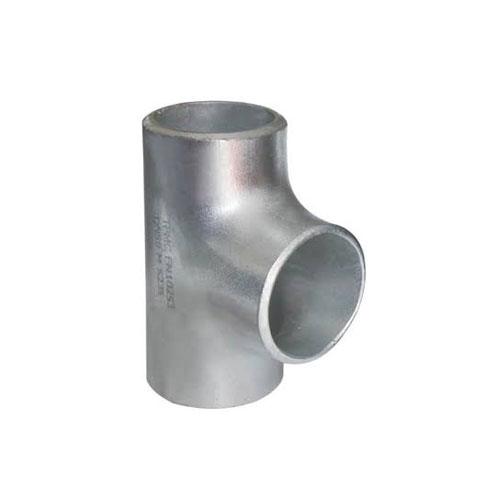
Industrial piping systems require dependable fittings to distribute fluids between connected pipelines. A Buttweld Equal Tee is a T-shaped pipe fitting designed to create a branch connection while maintaining the same nominal size across all three ends. It is used in piping layouts where a full-size branch is required for process flow or distribution.
Masiva Metals serves industrial metal-product requirements, including piping components for different applications. Selecting the right equal tee involves evaluating material grade, dimensions, wall thickness, manufacturing standards, and operating conditions. Understanding these factors helps buyers and project engineers specify fittings that suit their piping systems.
Buttweld Equal Tee
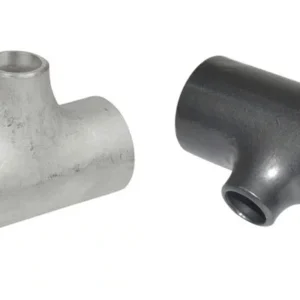
A Buttweld Equal Tee connects three pipe sections of the same nominal size. Two ends form the main pipeline, while the third creates a branch, generally at a 90-degree angle. This arrangement is commonly used to split or combine flow within a piping network.
The fitting is joined to compatible pipes using butt welding. Correct end preparation, alignment, and welding procedures are essential for a suitable connection. The fitting must also match the project’s dimensional and material specifications.
When ordering a Buttweld Equal Tee, buyers should provide the pipe size, material grade, wall thickness or schedule, applicable standard, and quantity. These details help ensure that the selected component is compatible with the intended installation.
Equal Tee Pipe Fitting
An Equal Tee Pipe Fitting provides a branch connection with the same nominal size as the main pipeline. It differs from a reducing tee, which has a smaller branch outlet.
Equal tees are useful in systems where a full-size branch is required. However, equal nominal sizes do not automatically mean that the flow rate will be equal through each outlet. Flow distribution depends on factors such as pressure, fluid properties, system design, and downstream resistance.
Dimensional compatibility is important when selecting an equal tee. Buyers should check the fitting’s dimensions and wall thickness against the connected pipes and the applicable standard. Accurate specifications can help simplify installation and reduce the likelihood of fitting mismatches.
Butt Weld Equal Tee Fitting
A Butt Weld Equal Tee Fitting is designed to connect with pipes through welded end joints. Butt-weld fittings are commonly used in industrial piping systems where the design calls for welded connections.
Before installation, the pipe and fitting ends should be inspected for damage, cleanliness, correct alignment, and appropriate preparation. Welding must follow an approved procedure suitable for the material and application.
Material compatibility is particularly important. The fitting should be selected to match the adjoining pipe requirements and the conditions in which the system will operate. Project specifications may also require particular inspection procedures or material documentation.
For procurement, buyers should clearly state whether seamless or welded construction is required, where applicable, along with the relevant material grade and standard.
Industrial Equal Tee
An Industrial Equal Tee can be used in a variety of piping arrangements across manufacturing, utilities, processing, and infrastructure projects. Its primary purpose is to create a branch connection of the same nominal size as the main pipeline.
Potential applications include water distribution, industrial process lines, oil and gas facilities, and chemical processing systems. Suitability depends on the fluid being conveyed, operating pressure, temperature, corrosion exposure, and the design requirements of the installation.
Engineers should evaluate these conditions before specifying the fitting. Choosing the correct industrial equal tee can help maintain compatibility throughout the pipeline and support the intended system layout.
Stainless Steel Equal Tee
A Stainless Steel Equal Tee may be suitable for applications that require the properties of stainless steel, including corrosion resistance in appropriate environments. The correct grade depends on the fluid, temperature, exposure conditions, and applicable engineering requirements.
Grades such as 304/304L and 316/316L are commonly specified for different industrial applications, but they are not interchangeable in every service environment. For example, chloride exposure and certain chemical conditions can affect material selection.
Stainless steel equal tees may be used in selected chemical, process, water-treatment, and food-related systems, subject to the applicable requirements. Buyers should verify the material grade, dimensions, manufacturing standard, and compatibility with the adjoining pipe before ordering.
Carbon Steel Equal Tee
A Carbon Steel Equal Tee is commonly considered for industrial piping systems where carbon steel meets the project’s strength, temperature, pressure, and service requirements.
The appropriate carbon steel grade should be selected according to the applicable piping specification and operating conditions. Buyers should also confirm the required wall thickness, dimensional standard, and any testing or inspection documentation specified by the project.
Carbon steel fittings may require additional corrosion protection depending on the operating environment. The selection should therefore account for both the material properties and the conditions in which the pipeline will be installed.
Alloy Steel Equal Tee
An Alloy Steel Equal Tee may be specified for applications requiring particular material properties under demanding operating conditions. Different alloy compositions offer different characteristics, so the correct selection depends on the project’s engineering requirements.
Factors such as temperature, pressure, chemical exposure, and compatibility with the adjoining piping must be considered. The fitting should meet the required material specification and any applicable heat-treatment, inspection, or documentation requirements.
Buyers should provide complete technical details when sourcing alloy steel fittings. This helps ensure that the supplied product matches the intended service rather than relying on a general material description.
Seamless Equal Tee
A Seamless Equal Tee is manufactured without a welded seam in the fitting body. Depending on the product specification and application, seamless construction may be required by a project or preferred for particular piping designs.
The choice between seamless and welded construction should be based on the applicable standard, service conditions, engineering requirements, and availability. Buyers should not assume that one construction type is automatically suitable for every application.
When sourcing a seamless equal tee, confirm the material grade, dimensions, wall thickness, manufacturing requirements, and inspection documentation. These details help procurement teams compare products accurately.
ASME B16.9 Equal Tee
An ASME B16.9 Equal Tee refers to a butt-welding fitting specified in accordance with the applicable requirements of ASME B16.9. The standard covers dimensions, tolerances, and related requirements for factory-made wrought butt-welding fittings within its scope.
When a project specifies ASME B16.9, the buyer should confirm that the offered fitting meets the required standard and is appropriate for the intended piping design. The material specification and wall thickness requirements must also be stated separately where applicable.
Standards compliance should be verified through the supplier’s product documentation. This is particularly important for industrial projects with defined inspection, quality, and traceability requirements.
How to Select the Right Buttweld Equal Tee
Before purchasing a Buttweld Equal Tee, review these key factors:
-
Pipe size: Confirm that all three connections match the required nominal size.
-
Material grade: Select the material according to the fluid and operating conditions.
-
Wall thickness: Specify the required schedule or thickness.
-
Manufacturing type: Confirm whether seamless or welded construction is required.
-
Applicable standard: Check the required dimensional and manufacturing specifications.
-
Operating conditions: Consider pressure, temperature, and corrosion exposure.
-
Documentation: Confirm any material certificates, inspection reports, or testing requirements.
-
Quantity and delivery: Specify the order quantity and project delivery requirements.
Providing accurate information helps suppliers identify a suitable fitting for the project.
Buttweld Equal Tee Supplier – Masiva Metals
Choosing a suitable supplier is an important part of industrial procurement. Buyers need clear product specifications, consistent communication, and fittings that match their project requirements.
Masiva Metals provides an option for businesses sourcing industrial metal products and piping components. When enquiring about a Buttweld Equal Tee, share the required material grade, nominal size, wall thickness, standard, construction type, and quantity.
Review the technical details before confirming an order, particularly for projects involving demanding service conditions or strict documentation requirements.
Visit Masiva Metals to enquire about product availability and sourcing requirements for Buttweld Equal Tee fittings.
Frequently Asked Questions
What is a Buttweld Equal Tee?
A Buttweld Equal Tee is a T-shaped pipe fitting with three connections of the same nominal size. It creates a branch in a piping system.
What is the difference between an equal tee and a reducing tee?
An equal tee has the same nominal size at all three ends, while a reducing tee has a smaller branch connection.
Which materials are available for equal tees?
Common material categories include stainless steel, carbon steel, and alloy steel. Availability depends on the supplier and the required specification.
What is an ASME B16.9 Equal Tee?
It is a butt-welding fitting specified to meet the applicable requirements of ASME B16.9. Buyers should verify compliance for the exact product.
What details are needed to order a Buttweld Equal Tee?
Provide the nominal size, material grade, wall thickness or schedule, manufacturing type, applicable standard, quantity, and any documentation requirements.
Conclusion
A Buttweld Equal Tee is an important component in industrial piping systems that require a full-size branch connection. Selecting the right fitting requires careful consideration of material, dimensions, wall thickness, manufacturing type, standards, and operating conditions.
For sourcing enquiries, contact Masiva Metals with your project specifications to identify an appropriate product for your industrial piping requirements.