Description
ASME B16.11 Socket Weld 90 Degree Elbow
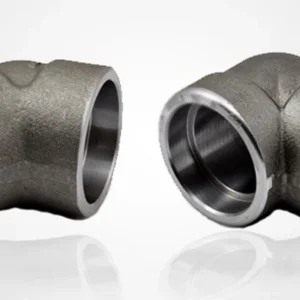
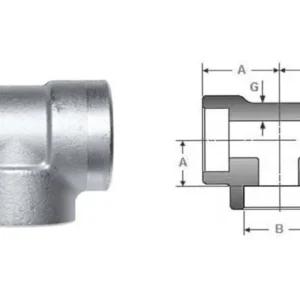
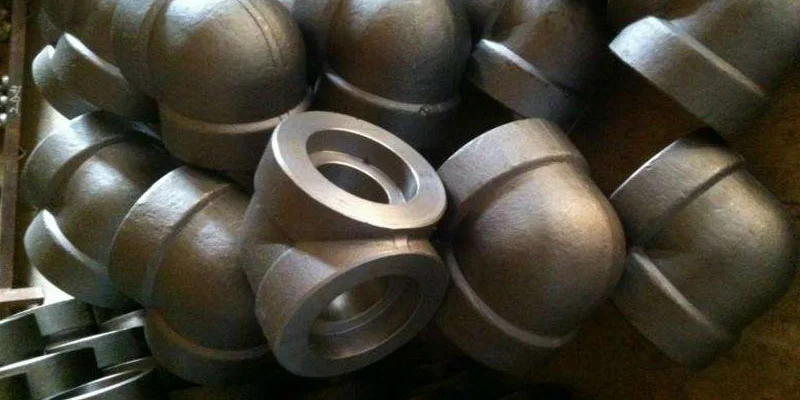
An ASME B16.11 Socket Weld 90 Degree Elbow is a forged pipe fitting designed to change the direction of a piping system by 90 degrees while providing a compact and reliable connection. Socket weld elbows are commonly selected for piping systems where the pipe is inserted into a recessed socket and joined by welding. Their compact construction, strength, and suitability for high-pressure piping applications make them useful across industrial sectors.
Masiva Metals manufactures and supplies socket weld fittings for international industrial piping requirements. The ASME B16.11 Socket Weld 90 Degree Elbow can be considered for applications involving process piping, oil and gas systems, chemical plants, power generation facilities, water systems, and other engineered piping installations. Proper material selection, dimensional compatibility, pressure requirements, and welding procedures are important when selecting this type of fitting.
ASME B16.11 Socket Weld 90 Degree Elbow
The ASME B16.11 Socket Weld 90 Degree Elbow is designed to provide a 90-degree directional change in a piping network.
- It uses a socket weld connection in which the pipe fits into the socket of the elbow.
- The 90-degree configuration allows piping routes to change direction efficiently.
- Forged construction can provide a strong fitting suitable for demanding industrial environments.
- It is useful where compact piping arrangements are required.
- The fitting is selected according to applicable dimensions, material requirements, pressure class, and project specifications.
- ASME B16.11 is associated with forged fittings and socket-welding and threaded-end dimensions.
- Correct welding practices are essential for achieving a reliable connection.
- The fitting can be incorporated into engineered piping assemblies according to project requirements.
Socket Weld 90 Degree Elbow
A Socket Weld 90 Degree Elbow connects two sections of pipe while changing the flow direction by approximately 90 degrees.
- The socket design provides a recessed area for pipe insertion.
- It can reduce the overall space required compared with some alternative piping arrangements.
- It is suitable for applications where welded connections are preferred.
- The fitting can be used in small-bore and process piping arrangements, depending on the design.
- Proper alignment helps maintain the intended piping geometry.
- Material compatibility should be confirmed before installation.
- Welding should follow the applicable project welding procedure.
- Inspection and testing should be completed according to project requirements.
Socket Weld Elbow
A Socket Weld Elbow is a forged fitting used to redirect piping while creating a welded socket connection.
- Socket weld elbows are available in different configurations and sizes.
- The 90-degree design is one of the most common directional configurations.
- They can be used in process, utility, industrial, and mechanical piping systems.
- The fitting provides a compact connection compared with certain flanged arrangements.
- The pipe is inserted into the fitting socket before welding.
- Correct fit-up is important for a dependable connection.
- The selected material should be suitable for the process medium and operating conditions.
- Pressure and temperature requirements should be evaluated before specifying the fitting.
90 Degree Socket Weld Elbow
The 90 Degree Socket Weld Elbow is particularly useful when a piping system needs a sharp directional change without requiring a long-radius routing arrangement.
- It changes the piping direction by 90 degrees.
- It supports compact equipment and piping layouts.
- It can be incorporated into fabricated piping assemblies.
- It is suitable for applications where socket welding is part of the approved joining method.
- The fitting can help simplify routing around equipment, structural elements, and other piping.
- Its forged construction is suitable for demanding industrial applications when the correct material is selected.
- Installation requires proper pipe preparation and alignment.
- Welding parameters should be controlled according to the applicable procedure.
ASME B16.11 Elbow
An ASME B16.11 Elbow is a forged fitting manufactured or supplied to the applicable dimensional requirements of ASME B16.11.
- The standard is widely referenced for forged socket-weld and threaded fittings.
- Dimensional conformity is important for piping interchangeability.
- Project specifications may define the required material, pressure class, size, and inspection requirements.
- Socket weld ends provide a welded connection method.
- The elbow configuration determines the direction of piping.
- The correct fitting should be selected according to system design.
- Buyers should confirm all technical requirements before placing an order.
- Documentation may be supplied according to project requirements.
Forged Socket Weld Elbow
A Forged Socket Weld Elbow is manufactured from suitable metal through a forging-based production route and formed into the required fitting geometry.
- Forged construction can provide robust mechanical properties.
- It is commonly associated with high-integrity industrial piping applications.
- The fitting can be produced in various material grades depending on project requirements.
- Material selection should consider pressure, temperature, corrosion exposure, and process fluid.
- Forged fittings can offer consistent geometry when manufactured under controlled processes.
- Quality inspection helps verify dimensional and material requirements.
- The socket area should be properly machined to achieve suitable pipe fit-up.
- Surface condition should be checked before installation.
Steel Socket Weld Elbow
A Steel Socket Weld Elbow can be manufactured from carbon steel, stainless steel, alloy steel, or another suitable steel grade depending on the application.
- Carbon steel options can be considered for many general industrial piping applications.
- Stainless steel versions can be selected where corrosion resistance is important.
- Alloy steel may be suitable for applications involving demanding temperature or mechanical conditions.
- Material selection must be based on the piping specification.
- The chemical composition and mechanical properties should meet the specified requirements.
- Surface treatment may be required depending on the material and service environment.
- Welding compatibility should be evaluated before installation.
- Traceability and material documentation may be important for critical projects.
Socket Weld Elbow Manufacturer
Choosing an experienced Socket Weld Elbow Manufacturer is important when fittings are being used in engineered piping systems.
- A capable manufacturer can produce fittings according to specified dimensions and requirements.
- Manufacturing controls help maintain consistent product quality.
- Material verification can help confirm that the supplied fitting corresponds to the required grade.
- Dimensional inspection supports proper fit-up during piping fabrication.
- Production documentation can help support project quality requirements.
- Packaging should protect the fittings during transportation and storage.
- Manufacturers may support standard and project-specific requirements.
- Masiva Metals supplies forged and fabricated piping products for industrial applications and international markets.
Socket Weld Elbow Supplier
A reliable Socket Weld Elbow Supplier should be able to provide suitable products along with clear technical information.
- Buyers should confirm fitting size and pressure class.
- Material grade should match the piping specification.
- End connection should be verified before ordering.
- Applicable dimensional requirements should be confirmed.
- Inspection documentation may be requested for critical applications.
- Packaging should prevent damage and contamination during shipment.
- Delivery requirements should be established before order confirmation.
- International projects may also require specific documentation and marking requirements.
Custom Socket Weld Elbow
A Custom Socket Weld Elbow may be required when standard configurations do not fully meet a project’s engineering requirements.
- Custom requirements may involve material, dimensions, marking, testing, or documentation.
- Engineering drawings can be used to define non-standard requirements.
- The required connection type should be clearly specified.
- Special corrosion-resistant materials may be considered for particular environments.
- Custom manufacturing should be reviewed against applicable engineering standards.
- Quality inspection requirements should be established before production.
- Custom products should be checked for dimensional conformity before dispatch.
- Masiva Metals can support project-oriented piping product requirements based on customer specifications.
ASME B16.11 Socket Weld 90 Degree Elbow Manufacturer in Italy & Belgium
For projects requiring an ASME B16.11 Socket Weld 90 Degree Elbow Manufacturer in Italy & Belgium, product conformity and supply reliability are important considerations.
- The fitting should match the project’s piping specifications.
- Material requirements should be confirmed before manufacturing.
- Socket dimensions should be suitable for the corresponding pipe.
- Pressure class should be selected according to the system design.
- Documentation requirements should be established for international procurement.
- Proper packaging supports safe transportation.
- Inspection requirements can be defined according to the project.
- Masiva Metals serves international industrial customers requiring engineered piping products.
Socket Weld 90 Degree Elbow Supplier in UAE
A Socket Weld 90 Degree Elbow Supplier in UAE can support industrial projects requiring compact welded pipe connections.
- The fitting can be used in process and utility piping.
- Material selection should consider local operating conditions and project requirements.
- Size and pressure class should be confirmed before procurement.
- Welding compatibility is an important consideration.
- Product marking can support identification during fabrication.
- Proper packaging helps protect fittings during transport and storage.
- Technical documentation can be requested according to project specifications.
- Masiva Metals can supply piping components for international industrial applications.
ASME B16.11 Elbow Manufacturer in Spain
An ASME B16.11 Elbow Manufacturer in Spain search should focus on dimensional conformity, material quality, and project requirements.
- Buyers should confirm whether socket weld ends are required.
- The required elbow angle should be specified.
- Material grade should correspond to the piping system.
- Pressure requirements should be reviewed.
- Dimensional requirements should be checked before installation.
- Inspection documentation can support quality assurance.
- Proper identification helps during fabrication and installation.
- International suppliers can support projects requiring coordinated export supply.
Socket Weld Elbow Supplier in Germany & South Korea
A Socket Weld Elbow Supplier in Germany & South Korea should provide fittings that meet the applicable project requirements.
- Dimensional accuracy is important for piping assembly.
- Material traceability may be required for industrial projects.
- Welding requirements should be clearly communicated.
- Pressure class should be selected according to design conditions.
- Quality checks can include visual and dimensional inspection.
- Project-specific testing can be considered when required.
- Export packaging should protect products throughout transportation.
- Masiva Metals supplies industrial piping products for global applications.
Socket Weld 90 Degree Elbow Manufacturer in Italy
An Socket Weld 90 Degree Elbow Manufacturer in Italy can be evaluated based on manufacturing capability, product conformity, and quality systems.
- The manufacturer should understand socket-weld fitting requirements.
- Material grade should be verified.
- Fitting dimensions should correspond to the required standard.
- Product inspection should be carried out according to applicable requirements.
- Proper surface condition is important before welding.
- Packaging should prevent impact and contamination.
- Product marking can assist traceability.
- International supply capabilities can simplify procurement for overseas projects.
Socket Weld Elbow Supplier in Belgium
A Socket Weld Elbow Supplier in Belgium can provide piping components for industrial and engineering projects.
- The fitting should be compatible with the specified pipe material.
- Size and pressure class should be confirmed.
- The required angle should be clearly stated.
- Welding requirements should be reviewed.
- Quality documents can be supplied according to project needs.
- Product protection during transportation is important.
- Storage should prevent corrosion and physical damage.
- Buyers should verify all technical details before installation.
ASME B16.11 Elbow Manufacturer in Germany
An ASME B16.11 Elbow Manufacturer in Germany can support projects where forged socket-weld fittings are required.
- Dimensional conformity is important for assembly.
- Material selection should be based on service conditions.
- Pressure class should match the system design.
- Socket depth and related dimensions should be suitable for the pipe.
- Manufacturing inspection supports product consistency.
- Material documentation can help with traceability.
- Packaging and identification should be suitable for industrial supply.
- Masiva Metals provides piping products for international engineering requirements.
Socket Weld 90 Degree Elbow Supplier in Vietnam & Philippines
A Socket Weld 90 Degree Elbow Supplier in Vietnam & Philippines can support industrial piping projects requiring compact directional fittings.
- The fitting can be used for process and utility piping applications.
- Correct material selection is essential.
- Size and pressure requirements should be established before ordering.
- Socket weld compatibility should be confirmed.
- Product inspection supports reliable installation.
- Export packaging is important for international shipments.
- Technical documentation can be coordinated with project requirements.
- Masiva Metals serves customers requiring industrial piping components for global projects.
Socket Weld Elbow Manufacturer in Saudi Arabia & UAE
A Socket Weld Elbow Manufacturer in Saudi Arabia & UAE can support demanding industrial piping requirements in oil, gas, petrochemical, water, and other sectors.
- The selected fitting should meet the applicable engineering specification.
- Material should be suitable for the operating environment.
- Pressure and temperature conditions should be reviewed.
- Socket weld connections require appropriate welding procedures.
- Dimensional checks help ensure proper fit-up.
- Inspection requirements should be defined before production.
- Packaging should protect the fitting during export transportation.
- Project documentation can be prepared according to customer requirements.
Applications of ASME B16.11 Socket Weld 90 Degree Elbow
The ASME B16.11 Socket Weld 90 Degree Elbow can be used in many industrial piping environments.
- Oil and gas processing facilities
- Petrochemical plants
- Chemical processing systems
- Power generation facilities
- Water treatment systems
- Industrial utility piping
- Process piping networks
- Manufacturing plants
- Instrumentation-related piping systems
- Compressed air systems
- Hydraulic and industrial fluid systems
- General mechanical piping applications
The exact application depends on the material, pressure class, temperature, process medium, and applicable engineering design.
Benefits of ASME B16.11 Socket Weld 90 Degree Elbow
A properly selected ASME B16.11 Socket Weld 90 Degree Elbow offers several practical advantages.
- Provides a 90-degree directional change.
- Supports compact piping layouts.
- Provides a welded socket connection.
- Forged construction can provide mechanical strength.
- Suitable for a wide range of industrial piping arrangements.
- Can simplify routing around equipment and structural obstacles.
- Available in different materials and sizes depending on requirements.
- Can be incorporated into prefabricated piping assemblies.
- Suitable for applications where threaded connections are not preferred.
- Can provide a clean and compact finished piping arrangement.
How to Select the Right Socket Weld 90 Degree Elbow
Selecting the correct Socket Weld Elbow requires consideration of multiple engineering factors.
- Material: Select the appropriate carbon steel, stainless steel, alloy steel, or other specified material.
- Size: Confirm the nominal pipe size and corresponding fitting dimensions.
- Pressure class: Select according to system design pressure.
- Temperature: Verify suitability for operating temperature.
- Process medium: Consider corrosion and chemical compatibility.
- Connection: Confirm that a socket weld connection is required.
- Standard: Verify the applicable dimensional and product requirements.
- Inspection: Determine whether additional testing or documentation is required.
- Marking: Confirm project-specific identification requirements.
- Packaging: Ensure suitable protection for transportation and storage.
Manufacturing Process of Forged Socket Weld Elbow
The production of a Forged Socket Weld Elbow involves controlled manufacturing operations designed to produce the required geometry and connection dimensions.
- Suitable raw material is selected according to the specified grade.
- Material identification and inspection may be performed before production.
- The material undergoes forging or forming operations.
- The basic elbow geometry is developed according to the required configuration.
- Machining establishes the socket and other critical dimensions.
- The fitting is inspected for dimensional conformity.
- Surface condition is checked.
- Additional testing can be performed where required.
- Marking and identification are applied according to the order requirements.
- Finished fittings are packaged for transportation.
Quality Control for ASME B16.11 Socket Weld 90 Degree Elbow
Quality control is an important part of producing reliable forged piping fittings.
- Raw material verification
- Dimensional inspection
- Visual inspection
- Surface condition checks
- Material identification
- Socket dimension verification
- Product marking verification
- Heat or batch traceability where applicable
- Additional non-destructive testing when specified
- Documentation review
- Final inspection before dispatch
Quality requirements should be agreed between the buyer and manufacturer based on the project specification.
Socket Weld Elbow Installation Considerations
Correct installation is important for the performance of a Socket Weld 90 Degree Elbow.
- Confirm that the fitting and pipe materials are compatible.
- Inspect the fitting before installation.
- Clean the socket and pipe surfaces.
- Ensure correct pipe insertion and alignment.
- Maintain appropriate fit-up according to the approved welding procedure.
- Use qualified welding personnel where required.
- Follow the applicable welding procedure specification.
- Allow the joint to cool appropriately after welding.
- Inspect the completed weld.
- Perform pressure or other required tests according to the piping system specification.
Socket Weld Elbow vs Threaded Elbow
Socket weld and threaded elbows serve similar directional purposes but use different connection methods.
- Socket weld elbow: The pipe is inserted into a socket and welded.
- Threaded elbow: The fitting and pipe use compatible threads.
- Socket welding can provide a compact permanent connection.
- Threaded connections may be convenient where welding is not practical.
- Socket weld fittings are often considered for higher-integrity industrial piping applications.
- Threaded fittings can be suitable for selected low- to moderate-pressure applications depending on design.
- The appropriate connection depends on the engineering specification.
- Material, pressure, temperature, maintenance, and installation requirements should all be considered.
Why Choose Masiva Metals for Socket Weld Elbows?
Masiva Metals focuses on supplying industrial piping products for domestic and international requirements.
- Product selection can be based on specified application requirements.
- Socket weld fittings can be supplied for industrial piping projects.
- Material requirements can be considered according to customer specifications.
- Dimensional requirements should be established before order confirmation.
- Quality inspection requirements can be coordinated with the project.
- Products can be prepared for international shipment.
- Documentation requirements can be discussed during procurement.
- Masiva Metals supports customers looking for reliable piping components for engineered applications.
FAQs About ASME B16.11 Socket Weld 90 Degree Elbow
What is an ASME B16.11 Socket Weld 90 Degree Elbow?
It is a forged pipe fitting designed to change piping direction by 90 degrees using a socket weld connection. It is commonly used in industrial piping systems where compact welded connections are required.
What does socket weld mean?
Socket weld means that the pipe is inserted into a recessed socket in the fitting and joined by welding around the connection.
What is the purpose of a 90-degree elbow?
A 90-degree elbow changes the direction of a piping route by approximately 90 degrees, allowing the pipe to be routed around equipment, structures, or other piping.
What materials are available for socket weld elbows?
Depending on the application, socket weld elbows can be produced from carbon steel, stainless steel, alloy steel, and other suitable materials.
Where are socket weld elbows used?
They are used in process piping, oil and gas, petrochemical, chemical, power, water, industrial utility, and other engineered piping systems.
How do I select a socket weld elbow?
Consider pipe size, material grade, pressure class, temperature, process medium, connection type, applicable standards, inspection requirements, and project specifications.
Is ASME B16.11 important for socket weld elbows?
Yes. ASME B16.11 provides requirements associated with forged socket-welding and threaded fittings, including dimensional considerations applicable to these fittings.
Can Masiva Metals supply custom socket weld elbows?
Custom requirements can be discussed based on project specifications, including material, dimensions, marking, inspection, and documentation requirements.
What should be checked before installing a socket weld elbow?
The fitting material, dimensions, socket condition, pipe compatibility, alignment, welding procedure, and applicable installation requirements should be checked before welding.
Conclusion
The ASME B16.11 Socket Weld 90 Degree Elbow is an important component for industrial piping systems that require a compact 90-degree directional change and welded socket connection. Its forged construction and practical geometry make it suitable for a broad range of engineered piping applications when the correct material, pressure class, dimensions, and installation procedures are selected.
Masiva Metals supplies industrial piping products for customers requiring reliable solutions for international projects. For your next piping requirement, contact Masiva Metals for product selection, material requirements, dimensional specifications, inspection needs, and export supply support.