
Description
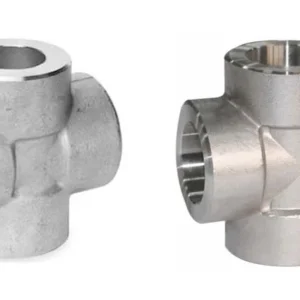
ASME B16.11 Socket Weld Unequal Cross
ASME B16.11 Socket Weld Unequal Cross is an important forged piping fitting used for creating branch connections in industrial piping systems where the connected outlets require different sizes. Designed for socket weld installation, this type of cross fitting can support compact piping layouts while providing a practical connection arrangement for process, utility, and industrial applications. The ASME B16.11 Socket Weld Unequal Cross is commonly considered for applications where dimensional consistency, reliable fabrication, and suitable material selection are important. Masiva Metal can support sourcing requirements for industrial piping components based on project specifications, applicable standards, material requirements, and application conditions.
ASME B16.11 Socket Weld Unequal Cross
An ASME B16.11 Socket Weld Unequal Cross is a forged fitting designed to provide four-way piping connections where the branch outlets are not necessarily identical in size. Unlike an equal cross, an unequal cross is selected when the piping arrangement requires different nominal connection sizes.
- Designed for socket weld piping connections.
- Suitable for compact and space-conscious piping layouts.
- Manufactured according to applicable ASME B16.11 requirements.
- Can be considered for industrial process and utility piping.
- Useful when different pipe sizes need to be connected through one fitting.
- Material selection depends on temperature, pressure, fluid, and corrosion requirements.
- Commonly considered for demanding industrial piping environments.
- Proper dimensional and material verification should be completed before installation.
Socket Weld Unequal Cross
A Socket Weld Unequal Cross creates a four-way connection using socket weld ends. The pipes are inserted into the sockets and joined through welding, producing a compact connection arrangement. This configuration can be useful in piping systems where threaded connections are not preferred and where welding is part of the approved fabrication procedure.
Key considerations include:
- Socket dimensions.
- Pipe outside diameter.
- Wall thickness.
- Material grade.
- Operating temperature.
- Design pressure.
- Corrosion conditions.
- Welding procedure.
- Inspection requirements.
- Applicable project specifications.
Choosing the correct Socket Weld Unequal Cross helps ensure that the fitting is compatible with the surrounding piping system.
ASME B16.11 Unequal Cross
ASME B16.11 Unequal Cross fittings are used when four-way piping arrangements require different connection sizes. The unequal configuration provides flexibility in systems where one or more branch connections have different dimensions from the primary piping.
Important selection factors include:
- Required nominal pipe sizes.
- Socket dimensions.
- Pressure class requirements.
- Material specification.
- Temperature conditions.
- Process fluid.
- Corrosion resistance.
- Applicable piping code.
- Welding compatibility.
- Inspection and testing requirements.
An ASME B16.11 Unequal Cross should always be selected according to the actual piping design rather than only by nominal size.
Socket Weld Cross
A Socket Weld Cross is a four-way fitting used to connect piping branches at a common intersection. The socket weld configuration allows pipes to be inserted into prepared sockets before welding.
Typical benefits include:
- Compact installation.
- Suitable for welded piping systems.
- Clean external configuration.
- Useful for branch piping arrangements.
- Availability in various engineering materials subject to specifications.
- Suitable for industrial applications requiring fabricated welded joints.
When a system needs different connection sizes, the unequal version can provide greater layout flexibility than an equal cross.
Unequal Cross
An Unequal Cross differs from an equal cross because its connecting outlets can have different nominal sizes. This makes it suitable for piping systems where multiple flow paths do not require identical pipe dimensions.
An Unequal Cross may be considered for:
- Process piping.
- Utility piping.
- Chemical processing systems.
- Oil and gas installations.
- Industrial plants.
- Power-related piping applications.
- Fabricated piping assemblies.
- Compact branch connection arrangements.
Correct selection is important because the fitting must match the dimensional and engineering requirements of the complete piping system.
Socket Weld Fitting
A Socket Weld Fitting is designed for a pipe to be inserted into a socket before the connection is welded. Socket weld fittings are widely used where compact welded connections are required.
Common socket weld fitting types include:
- Socket weld elbows.
- Socket weld tees.
- Socket weld crosses.
- Socket weld couplings.
- Socket weld unions.
- Socket weld reducers.
- Other forged piping configurations.
The Socket Weld Fitting selected for a project should correspond with pipe size, material, pressure requirements, temperature conditions, and applicable standards.
Forged Socket Weld Cross
A Forged Socket Weld Cross is produced using a forging-based manufacturing process suitable for the production of robust piping components. Forged fittings are commonly selected for industrial piping systems where mechanical performance and dimensional consistency are important.
A Forged Socket Weld Cross can offer:
- Suitable mechanical strength for applicable applications.
- Compact geometry.
- Welded connection capability.
- Consistent fitting configuration.
- Compatibility with different industrial piping materials, subject to specification.
- Potential suitability for high-pressure service when correctly specified.
The actual performance of a Forged Socket Weld Cross depends on material grade, manufacturing controls, design requirements, operating conditions, and applicable specifications.
ASME Socket Weld Cross
An ASME Socket Weld Cross is a socket weld cross fitting designed with reference to applicable ASME requirements. ASME B16.11 is associated with forged fittings, including socket-welding and threaded fittings.
For industrial procurement, buyers should review:
- Applicable ASME requirements.
- Required material specification.
- Nominal pipe size.
- Pressure class.
- Socket dimensions.
- Heat treatment requirements where applicable.
- Inspection requirements.
- Testing requirements.
- Traceability requirements.
- Project-specific documentation.
Using an ASME Socket Weld Cross that matches the engineering specification can simplify component selection and piping fabrication.
Stainless Steel Socket Weld Cross
A Stainless Steel Socket Weld Cross is commonly considered for applications where corrosion resistance and material compatibility are important. Stainless steel materials can be selected for different industrial services depending on the operating environment.
Potential applications include:
- Chemical processing.
- Food and process industries where applicable.
- Pharmaceutical-related process systems.
- Water and utility systems.
- Petrochemical applications.
- General industrial piping.
The appropriate stainless steel grade should be selected according to the process medium, temperature, corrosion conditions, mechanical requirements, and applicable project standards.
Industrial Socket Weld Cross
An Industrial Socket Weld Cross can be used in various piping systems requiring four-way connections. Industrial environments often demand careful attention to dimensions, materials, fabrication procedures, and inspection.
Common considerations include:
- Industrial piping design.
- Process requirements.
- Pressure and temperature conditions.
- Material compatibility.
- Welding procedure qualification.
- Quality inspection.
- Dimensional verification.
- Surface condition.
- Packaging and transportation.
For industrial procurement, buyers should provide complete technical requirements so the fitting can be evaluated against the intended application.
ASME B16.11 Socket Weld Unequal Cross Manufacturer
An ASME B16.11 Socket Weld Unequal Cross Manufacturer supplies forged socket weld cross fittings according to specified engineering and manufacturing requirements. A manufacturer-oriented sourcing process should consider more than just product availability.
Important factors include:
- Applicable manufacturing standard.
- Material specification.
- Required sizes.
- Pressure class.
- Dimensional requirements.
- Inspection procedures.
- Testing requirements.
- Product traceability.
- Packaging requirements.
- Export documentation.
Masiva Metal can be considered for industrial sourcing requirements where buyers need piping fittings aligned with project specifications. Final product configuration should always be confirmed against the applicable purchase order and technical documentation.
ASME B16.11 Socket Weld Unequal Cross Supplier
An ASME B16.11 Socket Weld Unequal Cross Supplier supports buyers with product sourcing, specifications, documentation, and delivery requirements. Selecting a suitable supplier is important for projects where fittings must integrate with existing or newly fabricated piping systems.
A supplier evaluation can include:
- Product range.
- Material availability.
- Dimensional consistency.
- Quality-control procedures.
- Inspection documentation.
- Packaging standards.
- Export experience.
- Delivery coordination.
- Technical communication.
- Project-specific support.
For international procurement, clear communication of fitting size, material, quantity, standard, and delivery requirements can help reduce order discrepancies.
Socket Weld Unequal Cross for Industrial Piping
Socket Weld Unequal Cross for Industrial Piping is useful when a piping system requires four connection points with different sizes. The fitting can help engineers and fabricators create compact branch arrangements while maintaining a welded connection configuration.
Industrial applications may include:
- Process piping networks.
- Utility lines.
- Chemical plants.
- Petrochemical facilities.
- Oil and gas systems.
- Manufacturing facilities.
- Industrial water systems.
- General plant piping.
Before selecting a Socket Weld Unequal Cross for Industrial Piping, engineers should verify pressure, temperature, material compatibility, pipe sizes, and welding requirements.
ASME B16.11 Unequal Socket Weld Cross
An ASME B16.11 Unequal Socket Weld Cross provides a practical solution when a four-way connection requires different pipe sizes. Its socket weld design supports welded assembly and can be suitable for compact piping layouts.
Selection should consider:
- Main pipe size.
- Branch pipe sizes.
- Socket dimensions.
- Material grade.
- Pressure requirements.
- Temperature range.
- Fluid characteristics.
- Welding requirements.
- Applicable inspection criteria.
- Project specifications.
The fitting should be incorporated into the piping design only after confirming dimensional compatibility with connected pipes and other components.
Forged ASME B16.11 Socket Weld Unequal Cross
Forged ASME B16.11 Socket Weld Unequal Cross fittings are intended for applications requiring a forged socket weld configuration. Forging is a manufacturing method commonly used for producing fittings with controlled geometry and suitable mechanical characteristics.
Potential advantages of a forged configuration include:
- Robust fitting construction.
- Compact design.
- Suitable geometry for socket welding.
- Consistent manufacturing approach.
- Compatibility with industrial piping applications subject to material and design requirements.
The Forged ASME B16.11 Socket Weld Unequal Cross should be selected according to the required material specification, pressure class, dimensions, and service conditions.
Stainless Steel ASME B16.11 Socket Weld Cross
Stainless Steel ASME B16.11 Socket Weld Cross fittings can be considered when a project requires stainless steel construction combined with socket weld installation. Stainless steel selection is particularly relevant where corrosion resistance and material compatibility are important design considerations.
Before purchasing, verify:
- Stainless steel grade.
- Required dimensions.
- Pressure class.
- Socket configuration.
- Operating temperature.
- Process fluid.
- Corrosion conditions.
- Applicable standards.
- Inspection requirements.
Different stainless steel grades provide different characteristics, so material selection should be based on engineering requirements rather than general assumptions.
Socket Weld Unequal Cross for High Pressure Piping
Socket Weld Unequal Cross for High Pressure Piping applications requires careful engineering evaluation. High-pressure piping systems typically require close attention to material strength, fitting dimensions, pressure class, welding procedures, inspection, and operating conditions.
Important considerations include:
- Design pressure.
- Design temperature.
- Material grade.
- Pressure class.
- Pipe wall thickness.
- Welding procedure.
- Non-destructive examination where specified.
- Dimensional inspection.
- Applicable piping code.
- Manufacturer documentation.
A Socket Weld Unequal Cross for High Pressure Piping should not be selected solely by fitting name. The complete design and service conditions must be reviewed to determine suitability.
ASME B16.11 Socket Weld Cross for Oil and Gas
ASME B16.11 Socket Weld Cross for Oil and Gas applications can be considered for piping arrangements within oil, gas, petrochemical, and related industrial facilities. These environments can involve demanding pressure, temperature, and corrosion conditions.
Procurement considerations may include:
- Material grade.
- Pressure requirements.
- Temperature requirements.
- Process medium.
- Corrosion environment.
- Applicable project standards.
- Inspection and testing.
- Traceability.
- Documentation.
- Export packaging.
For oil and gas projects, fitting requirements should be matched with the project’s approved specifications and piping classes.
Socket Weld Unequal Cross for Chemical Industry
Socket Weld Unequal Cross for Chemical Industry applications may be used where compact branch connections are required in chemical process piping. Chemical services can involve corrosive or reactive media, making material compatibility especially important.
Selection should consider:
- Chemical composition of the process medium.
- Corrosion characteristics.
- Operating temperature.
- Operating pressure.
- Required material grade.
- Piping class.
- Welding requirements.
- Inspection procedures.
- Surface condition.
- Applicable project standards.
A properly specified Socket Weld Unequal Cross for Chemical Industry can support the fabrication of complex piping layouts while maintaining a compact welded configuration.
ASME B16.11 Socket Weld Unequal Cross Exporter
An ASME B16.11 Socket Weld Unequal Cross Exporter supports international buyers requiring forged socket weld fittings for industrial piping projects. Export supply requires attention to both product specifications and shipment requirements.
International buyers may need:
- Product specifications.
- Material documentation.
- Inspection reports where applicable.
- Quantity confirmation.
- Packing details.
- Commercial documentation.
- Shipping coordination.
- Export packaging.
- Delivery planning.
- Project-specific documentation.
Masiva Metal can support sourcing requirements for international industrial piping projects based on buyer specifications and confirmed product requirements.
ASME B16.11 Socket Weld Unequal Cross Supplier in Italy and Belgium
An ASME B16.11 Socket Weld Unequal Cross Supplier in Italy and Belgium can support industrial buyers requiring socket weld forged fittings for piping applications. Projects in these markets may require careful coordination of technical documentation, dimensions, materials, and delivery requirements.
Buyers should specify:
- Required fitting sizes.
- Material grade.
- Quantity.
- Applicable standard.
- Pressure class.
- Inspection requirements.
- Delivery location.
- Packaging expectations.
- Required documentation.
Clear technical specifications can help ensure that the supplied ASME B16.11 Socket Weld Unequal Cross matches the intended piping application.
ASME B16.11 Socket Weld Unequal Cross Supplier in UAE
An ASME B16.11 Socket Weld Unequal Cross Supplier in UAE can serve industrial projects involving process piping, energy-related facilities, construction, manufacturing, and other applications.
When sourcing from an international supplier, UAE buyers can consider:
- Product standard.
- Material specification.
- Required sizes.
- Pressure class.
- Inspection documentation.
- Quantity.
- Packaging.
- Delivery schedule.
- Export documentation.
Project-specific requirements should be communicated before order confirmation to ensure the selected fittings are appropriate for the intended piping system.
ASME B16.11 Socket Weld Unequal Cross Supplier in Spain
An ASME B16.11 Socket Weld Unequal Cross Supplier in Spain can provide sourcing support for industrial piping projects where forged socket weld fittings are required. Proper product specification is important for achieving dimensional compatibility with the connected pipework.
Key purchasing information includes:
- Fitting type.
- Nominal sizes.
- Material grade.
- Pressure class.
- Standard.
- Quantity.
- Inspection requirements.
- Documentation.
- Packing.
- Delivery requirements.
The exact product configuration should be confirmed against the project’s engineering drawings and piping specifications.
ASME B16.11 Socket Weld Unequal Cross Supplier in Germany and South Korea
An ASME B16.11 Socket Weld Unequal Cross Supplier in Germany and South Korea can support industrial procurement requirements for forged socket weld piping components. Both markets have diverse industrial applications where technical documentation and product consistency can be important.
For efficient sourcing, buyers should provide:
- Technical specifications.
- Material requirements.
- Dimensions.
- Quantity.
- Required inspection.
- Applicable project standards.
- Delivery schedule.
- Packing requirements.
- Documentation requirements.
A detailed purchase specification allows the supplier to verify the required ASME B16.11 Socket Weld Unequal Cross configuration before production or dispatch.
ASME B16.11 Socket Weld Unequal Cross Exporter to Italy, Belgium, Germany, Vietnam and Philippines
An ASME B16.11 Socket Weld Unequal Cross Exporter to Italy, Belgium, Germany, Vietnam and Philippines can support international industrial projects requiring forged socket weld fittings. Export orders may involve multiple technical and logistical requirements.
International procurement can include:
- Product identification.
- Material specifications.
- Dimensional requirements.
- Quantity planning.
- Quality inspection.
- Packing specifications.
- Shipping documentation.
- Delivery coordination.
- Traceability documentation where required.
- Project-specific compliance requirements.
For international projects, buyers should confirm all technical requirements before order placement so that the supplied fittings correspond with the approved piping design.
ASME B16.11 Socket Weld Unequal Cross Supplier in Saudi Arabia and UAE
An ASME B16.11 Socket Weld Unequal Cross Supplier in Saudi Arabia and UAE can support piping component requirements for industrial, energy, process, construction, and infrastructure-related projects.
Important procurement considerations include:
- ASME B16.11 requirements.
- Required fitting configuration.
- Material grade.
- Pipe and socket dimensions.
- Pressure class.
- Quantity.
- Inspection requirements.
- Packaging.
- Delivery schedule.
- Project documentation.
Masiva Metal can be considered for sourcing support where customers require industrial socket weld fittings based on defined technical and commercial specifications.
Applications of ASME B16.11 Socket Weld Unequal Cross
The ASME B16.11 Socket Weld Unequal Cross can be considered for a variety of industrial piping applications where four-way connections with different outlet sizes are required.
Common application areas include:
- Oil and gas piping.
- Petrochemical plants.
- Chemical processing.
- Industrial manufacturing.
- Process piping.
- Utility piping.
- Power-related systems.
- Water and industrial fluid systems.
- Plant maintenance projects.
- Fabricated piping assemblies.
The suitability of the fitting depends on the actual service conditions and applicable engineering requirements.
How to Select the Right ASME B16.11 Socket Weld Unequal Cross
Selecting the correct ASME B16.11 Socket Weld Unequal Cross requires a systematic review of the piping application.
- Confirm all required pipe sizes.
- Identify the main and branch connection dimensions.
- Select the appropriate material grade.
- Confirm pressure and temperature conditions.
- Review process-fluid compatibility.
- Confirm applicable pressure class.
- Check socket dimensions.
- Review welding requirements.
- Determine inspection and testing requirements.
- Confirm project documentation requirements.
- Verify quantity and delivery schedule.
Providing complete information to the supplier can make the procurement process more efficient and reduce the risk of receiving an unsuitable fitting.
Quality Considerations for ASME B16.11 Socket Weld Unequal Cross
Quality is an important consideration when purchasing forged socket weld fittings for industrial applications. A suitable quality-control process can include dimensional checks, material verification, visual inspection, and other inspections or tests required by the purchase specification.
Buyers may review:
- Material certificates where required.
- Dimensional inspection.
- Visual inspection.
- Marking and identification.
- Surface condition.
- Heat treatment documentation where applicable.
- Testing requirements.
- Inspection reports.
- Packaging condition.
- Product traceability.
The exact inspection scope should be established according to the project specification and purchase order.
Benefits of ASME B16.11 Socket Weld Unequal Cross
The ASME B16.11 Socket Weld Unequal Cross can provide several practical benefits for suitable piping applications.
- Supports four-way piping connections.
- Allows different connection sizes.
- Provides a compact socket weld configuration.
- Suitable for fabricated piping assemblies.
- Can be selected in various materials subject to requirements.
- Useful for industrial process piping.
- Can simplify certain branch piping layouts.
- Supports welded connection arrangements.
- Available for international sourcing requirements.
- Can be specified according to project requirements.
These benefits should always be evaluated in relation to the specific piping design and operating conditions.
Why Choose Masiva Metal for Socket Weld Unequal Cross
Masiva Metal can be considered as a sourcing partner for industrial piping fittings where customers require products according to defined technical specifications.
Potential sourcing considerations include:
- Industrial piping product requirements.
- Socket weld fitting requirements.
- Project-specific specifications.
- Material and dimensional requirements.
- Quality-control expectations.
- Inspection requirements.
- Packaging and delivery coordination.
- Domestic and international supply requirements.
Customers should provide the required fitting size, material, quantity, standard, pressure class, application, and delivery requirements for accurate product evaluation.
Frequently Asked Questions About ASME B16.11 Socket Weld Unequal Cross
What is an ASME B16.11 Socket Weld Unequal Cross?
An ASME B16.11 Socket Weld Unequal Cross is a forged piping fitting used to create a four-way connection where the connected outlets can have different sizes. It uses socket weld ends for welded pipe connections.
What is the difference between an equal cross and an unequal cross?
An equal cross generally has connection outlets of the same nominal size, while an unequal cross has different connection sizes. The unequal configuration is selected when the piping layout requires different pipe dimensions.
Where is a Socket Weld Unequal Cross used?
A Socket Weld Unequal Cross can be considered for industrial, process, chemical, petrochemical, oil and gas, utility, and other piping applications where a four-way connection with different sizes is required.
Is ASME B16.11 Socket Weld Unequal Cross suitable for high-pressure applications?
It may be considered for high-pressure applications when the fitting’s material, pressure class, dimensions, and other requirements are appropriate for the system. The complete piping design and applicable specifications should be reviewed before selection.
Which materials are available for Socket Weld Unequal Cross?
Material availability depends on the manufacturer and project requirements. Carbon steel, alloy steel, and stainless steel configurations may be considered depending on application and specification.
How should an ASME B16.11 Socket Weld Unequal Cross be selected?
Selection should consider pipe sizes, socket dimensions, material grade, pressure, temperature, process fluid, corrosion conditions, welding requirements, applicable standards, and project specifications.
Can Masiva Metal supply Socket Weld Unequal Cross internationally?
Masiva Metal can support international sourcing requirements for industrial piping fittings based on confirmed product specifications, quantities, documentation, and delivery requirements.
Contact Masiva Metal for ASME B16.11 Socket Weld Unequal Cross
For ASME B16.11 Socket Weld Unequal Cross requirements, customers can provide their required sizes, material grade, quantity, pressure class, application, applicable standard, inspection requirements, and delivery location.
Masiva Metal can then evaluate the requirement and support the sourcing process according to the project’s technical and commercial specifications.
For industrial piping projects, accurate product information is the first step toward selecting the appropriate Socket Weld Unequal Cross. Whether the requirement involves process piping, oil and gas, chemical applications, industrial utilities, or international export supply, product selection should always be based on verified engineering requirements.