Description
Rubber Lined Pipe Spool Manufacturer & Supplier – Masiva Metal
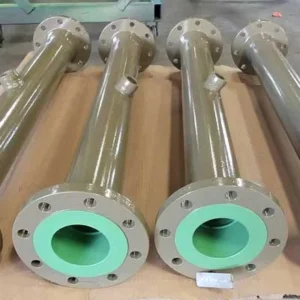
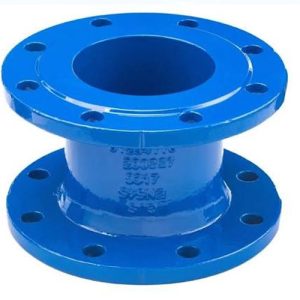
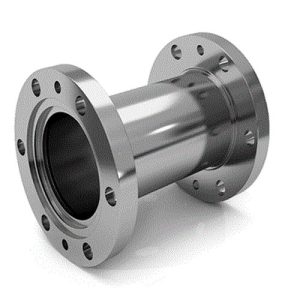
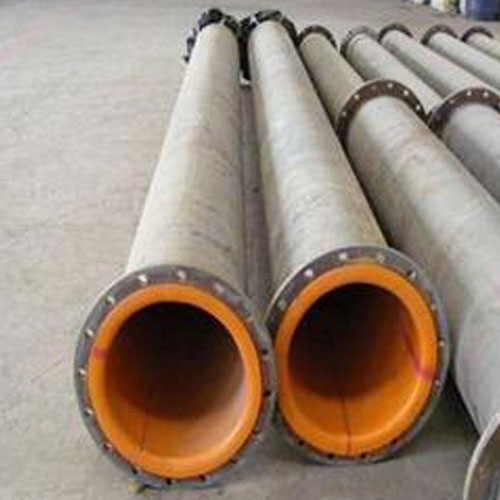
A Rubber Lined Pipe Spool is a fabricated piping assembly consisting of a pipe section or spool that incorporates a protective rubber lining on its internal surface. The rubber lining acts as a barrier between the conveyed medium and the metallic pipe body, making rubber lined piping useful in applications where abrasion, corrosion or chemical exposure can affect conventional metal piping. Depending on the application, rubber-lined spools can be designed with flanges, bends, branches, reducers and other connection arrangements. The selection of the pipe material, rubber lining compound, thickness, dimensions and connection configuration should be based on the actual service conditions and project specifications. Masiva Metal can be approached for customized industrial piping requirements where accurate fabrication and application-specific specifications are important.
Rubber Lined Pipe Spool
A Rubber Lined Pipe Spool is commonly used when a metallic pipe structure needs internal protection against an aggressive process medium. The spool combines the mechanical strength of the outer pipe with an internal elastomeric lining selected for the service environment.
Important characteristics include:
- Fabricated according to the required piping dimensions.
- Internal rubber lining provides a protective barrier.
- Can be configured with different connection arrangements.
- Suitable for selected corrosive and abrasive services.
- Can be designed for straight sections and complex piping assemblies.
- Lining material should be compatible with the process medium.
- Lining thickness should be selected according to service requirements.
- Fabrication dimensions should correspond with project drawings.
- Inspection of the lining is important before installation.
A rubber-lined spool is not simply a standard pipe with a generic rubber coating. The lining system needs to be selected and applied according to the fluid, concentration, temperature, pressure, abrasion level and mechanical conditions of the intended application.
Rubber Lined Pipe Spools
Rubber Lined Pipe Spools are prefabricated piping sections that can be installed as part of a larger industrial piping network. Prefabrication can help reduce the amount of field fabrication required during installation.
Typical spool configurations may include:
- Straight pipe sections.
- Flanged pipe spools.
- Elbow assemblies.
- Tee assemblies.
- Reducer assemblies.
- Branch connections.
- Custom-fabricated piping sections.
- Equipment connection spools.
- Drain and utility spools.
The exact design depends on the piping layout. Each spool can be fabricated according to dimensional drawings so that the finished component corresponds with the intended installation location.
Rubber Lined Spool
A Rubber Lined Spool provides an internal elastomeric barrier while retaining a structural metallic outer shell. This arrangement is useful in industrial systems where the process fluid could cause corrosion or abrasion of the base metal.
Key considerations include:
- Pipe diameter.
- Pipe wall thickness.
- Rubber compound.
- Rubber lining thickness.
- Operating temperature.
- Operating pressure.
- Chemical concentration.
- Abrasive particle content.
- Flange configuration.
- Installation conditions.
The lining should be selected according to the actual service medium rather than simply choosing rubber as a generic material. Different elastomeric compounds have different resistance characteristics.
Rubber Lined Pipe
Rubber Lined Pipe is used to protect metallic piping from selected corrosive and abrasive process conditions. The rubber lining creates a separation layer between the transported material and the pipe substrate.
Applications may include:
- Slurry transportation.
- Mineral processing.
- Chemical processing.
- Wastewater systems.
- Water treatment.
- Mining operations.
- Fertilizer facilities.
- Industrial process plants.
- Material handling systems.
The effectiveness of a rubber-lined pipe depends on correct material selection, lining adhesion, lining thickness, fabrication quality and service conditions.
Rubber Lined Pipe Spool Manufacturer
A Rubber Lined Pipe Spool Manufacturer needs to coordinate pipe fabrication with lining requirements. The finished spool must satisfy both the dimensional requirements of the piping system and the performance requirements of the internal lining.
Manufacturing considerations can include:
- Engineering drawing review.
- Base pipe material selection.
- Cutting and fabrication.
- Welding and dimensional control.
- Surface preparation.
- Rubber selection.
- Lining application.
- Curing or bonding process.
- Lining inspection.
- Flange-face protection.
- Final dimensional inspection.
- Packaging.
For customized projects, the manufacturer should receive accurate spool drawings, connection details and operating conditions before production.
Rubber Lined Pipe Spool Supplier
A Rubber Lined Pipe Spool Supplier should be able to understand both the fabrication and lining requirements of the project. This is especially important when the spools include multiple fittings or complicated geometries.
When evaluating a supplier, purchasers should consider:
- Fabrication capability.
- Lining experience.
- Available rubber compounds.
- Dimensional control.
- Quality inspection.
- Lining inspection.
- Documentation.
- Packaging.
- Project quantity.
- Delivery requirements.
A complete technical inquiry should include pipe dimensions, lining requirements, connection details, operating conditions and any applicable inspection specifications.
Rubber Lined Steel Pipe Spool
A Rubber Lined Steel Pipe Spool combines a steel structural pipe with an internal rubber lining. Steel provides the structural body, while the rubber lining can protect the internal surface from selected process conditions.
Potential advantages include:
- Strong metallic structural body.
- Internal protection against selected corrosive media.
- Resistance to certain abrasive services.
- Customizable spool geometry.
- Compatibility with flanged piping systems.
- Reduced direct contact between process fluid and steel.
The steel grade and rubber compound should be selected independently according to the structural and chemical requirements of the application.
Rubber Lined Piping
Rubber Lined Piping can be used as part of a larger process piping system where internal protection is required. Individual rubber-lined spools can be joined to create complete piping routes.
A rubber-lined piping system may contain:
- Straight spools.
- Elbows.
- Tees.
- Reducers.
- Crosses.
- Branches.
- Flanged connections.
- Valves.
- Equipment connections.
System design should account for lining continuity, flange connections, temperature limitations, pressure requirements and potential mechanical damage during transportation or installation.
Industrial Rubber Lined Pipe Spool
An Industrial Rubber Lined Pipe Spool is generally specified for demanding process environments where corrosion and abrasion resistance are important considerations.
Industrial applications can include:
- Mining.
- Mineral processing.
- Chemical manufacturing.
- Fertilizer production.
- Power generation.
- Water treatment.
- Wastewater treatment.
- Slurry handling.
- Bulk material processing.
- Industrial utilities.
The actual suitability of rubber lining depends on the process medium and operating conditions. Engineers should confirm chemical compatibility and temperature limitations before specifying the lining.
Custom Rubber Lined Pipe Spool
A Custom Rubber Lined Pipe Spool is fabricated according to project-specific dimensions rather than relying solely on standard straight-pipe configurations.
Customization may involve:
- Special spool lengths.
- Different pipe diameters.
- Multiple branch connections.
- Flanged ends.
- Customized elbow arrangements.
- Reducers.
- Offset configurations.
- Equipment connections.
- Special lining thickness.
- Project-specific rubber compounds.
Custom fabrication can be useful when piping layouts contain complex geometries or when the spool must connect directly between existing equipment and piping.
Rubber Lining Materials
Rubber lining material should be selected according to the process environment. Different elastomers provide different combinations of chemical resistance, abrasion resistance, flexibility and temperature capability.
Potential lining materials can include:
- Natural rubber.
- Synthetic rubber.
- Neoprene.
- EPDM.
- Butyl rubber.
- Other specialized elastomeric compounds.
Selection depends on:
- Chemical compatibility.
- Temperature.
- Abrasion.
- Fluid concentration.
- Pressure.
- Mechanical impact.
- Required service life.
- Cleaning procedures.
There is no universal rubber compound suitable for every process fluid. The final lining specification should be established according to the manufacturer’s technical data and project requirements.
Rubber Lined Pipe Spool Manufacturing Process
Manufacturing a Rubber Lined Pipe Spool requires controlled fabrication of the metallic body followed by suitable preparation and application of the lining.
A typical process may include:
- Review of approved drawings.
- Selection and inspection of the base pipe.
- Cutting to required dimensions.
- Fabrication of the spool.
- Welding of components.
- Dimensional inspection.
- Surface preparation.
- Application of rubber lining.
- Bonding or curing according to the lining system.
- Lining inspection.
- Final dimensional inspection.
- Marking.
- Protective packaging.
The exact process depends on the lining technology, rubber compound, spool geometry and project specification.
Rubber Lining Surface Preparation
Surface preparation is a critical part of rubber lining because the quality of the bond between the lining and metallic substrate can influence service performance.
Important preparation steps can include:
- Removal of oil and grease.
- Removal of rust and contaminants.
- Appropriate surface roughening.
- Cleaning of the prepared surface.
- Verification of surface condition.
- Application of suitable bonding systems where specified.
- Protection from contamination before lining.
Poor surface preparation can compromise adhesion and may result in premature lining failure. Therefore, preparation procedures should be controlled and documented where required.
Rubber Lined Pipe Spool Quality Control
Quality control should cover both the metallic spool and the finished lining. Dimensional accuracy alone is not enough for a rubber-lined component.
Quality checks can include:
- Base material verification.
- Dimensional inspection.
- Weld inspection.
- Surface preparation checks.
- Lining thickness measurement.
- Visual examination.
- Adhesion-related checks where specified.
- Spark or holiday testing where applicable.
- Flange-face inspection.
- Final documentation review.
The appropriate inspection program should be established according to the lining specification, service requirements and purchaser’s quality plan.
Rubber Lined Pipe Spool Dimensions
Dimensional accuracy is essential when a spool must connect with other prefabricated sections or equipment. Incorrect dimensions can cause alignment problems during installation.
Important dimensions may include:
- Nominal pipe size.
- Outside diameter.
- Pipe wall thickness.
- Spool overall length.
- Center-to-face dimensions.
- Flange dimensions.
- Bolt-hole positions.
- Branch orientation.
- Elbow angles.
- Reducer dimensions.
- Lining thickness.
For complex spool assemblies, approved fabrication drawings should be used as the primary dimensional reference.
Rubber Lined Pipe Spool Applications
Rubber-lined spools are commonly considered for process applications where internal surfaces are exposed to corrosive or abrasive materials.
Potential applications include:
- Mining slurry lines.
- Mineral processing plants.
- Chemical plants.
- Fertilizer plants.
- Wastewater treatment.
- Water treatment.
- Power plant process systems.
- Ash handling systems.
- Industrial drainage.
- Slurry transportation.
- Material processing facilities.
The application should be evaluated individually because rubber lining performance depends strongly on fluid chemistry, temperature, velocity and abrasive content.
Rubber Lined Pipe Spool Benefits
A properly designed rubber-lined spool can provide several practical advantages in appropriate applications.
Key benefits include:
- Protection of the metallic pipe substrate.
- Resistance to selected corrosive environments.
- Resistance to certain abrasive slurries.
- Reduced direct contact between fluid and steel.
- Customizable spool configurations.
- Compatibility with prefabricated piping systems.
- Potentially extended component service life.
- Reduced exposure of the base metal to aggressive media.
These benefits depend on correct rubber selection, proper lining application and suitable operating conditions.
Rubber Lined Pipe Spool Selection Factors
Selecting a Rubber Lined Pipe Spool requires consideration of the entire process environment.
Important factors include:
- Fluid: Identify the exact process medium.
- Concentration: Chemical concentration can affect elastomer compatibility.
- Temperature: Verify the lining’s temperature range.
- Pressure: Check the pressure requirements of the complete spool.
- Abrasion: Evaluate particle size, hardness and concentration.
- Velocity: Consider fluid velocity and potential erosion.
- Pipe Size: Match the spool to the connected piping.
- Lining: Select a compatible rubber compound and thickness.
- Connections: Confirm flange and fitting requirements.
- Dimensions: Use approved spool drawings.
- Inspection: Define lining and fabrication inspection requirements.
- Installation: Consider handling and protection of the lining.
Rubber Lined Pipe Spool Installation
Installation requires careful handling because the internal lining can be damaged by sharp objects, excessive impact or unsuitable tools.
Installation considerations include:
- Inspect the lining before installation.
- Keep internal surfaces clean.
- Avoid dragging the spool over abrasive surfaces.
- Protect flange faces.
- Do not use sharp tools against the lining.
- Align connected spools correctly.
- Avoid forced installation.
- Use appropriate gaskets.
- Tighten flange bolts according to the specified procedure.
- Support the piping correctly.
- Complete required leak or pressure testing.
During installation, the lining should be protected from mechanical damage. Any visible damage should be assessed before the spool is placed into service.
Rubber Lined Pipe Spool Maintenance
Maintenance requirements depend on the application and operating conditions. Regular inspection can help identify lining damage before it develops into a larger piping problem.
Maintenance activities may include:
- Visual inspection.
- Checking for leaks.
- Inspection of accessible lining surfaces.
- Monitoring corrosion or erosion indicators.
- Checking flange connections.
- Inspecting supports.
- Monitoring unusual vibration.
- Reviewing pressure and flow conditions.
- Repairing damaged lining according to approved procedures.
Inspection frequency should be based on process severity and the recommendations applicable to the specific lining system.
Rubber Lined Pipe Spool Manufacturer in Italy & Belgium
Industrial projects in Italy and Belgium may require customized rubber-lined piping components for process, chemical, water treatment and other applications. A manufacturer should be able to work from detailed drawings and lining specifications.
When requesting a quotation, provide:
- Pipe size.
- Spool dimensions.
- Base pipe material.
- Rubber lining material.
- Lining thickness.
- Flange details.
- Operating temperature.
- Operating pressure.
- Process medium.
- Quantity.
- Inspection requirements.
Masiva Metal can be approached for project-specific industrial piping requirements and customized spool fabrication discussions.
Rubber Lined Pipe Spool Supplier in United Arab Emirates (UAE)
Projects in the UAE can involve industrial and process piping systems exposed to demanding environmental and operational conditions. A Rubber Lined Pipe Spool Supplier should therefore receive complete technical information before manufacturing or supply.
Important information includes:
- Process medium.
- Chemical concentration.
- Operating temperature.
- Pressure.
- Pipe dimensions.
- Lining compound.
- Lining thickness.
- Flange configuration.
- Quantity.
- Delivery requirements.
A detailed specification supports better product selection and project coordination.
Rubber Lined Pipe Spool Manufacturer in Spain
For projects in Spain, rubber-lined spools can be specified according to the requirements of chemical, mining, water treatment and industrial piping systems.
Buyers should identify:
- Required spool geometry.
- Pipe material.
- Rubber compound.
- Lining thickness.
- Connection details.
- Operating conditions.
- Applicable standards.
- Inspection requirements.
- Quantity and delivery schedule.
The manufacturer should work from approved drawings whenever the spool contains multiple connections or complex geometry.
Rubber Lined Pipe Spool Supplier in Germany & South Korea
Germany and South Korea have extensive industrial, manufacturing and process sectors where engineered piping components may require detailed technical specifications.
When sourcing rubber-lined spools, procurement teams should provide:
- Approved fabrication drawings.
- Pipe dimensions.
- Material specification.
- Lining specification.
- Process conditions.
- Flange requirements.
- Inspection requirements.
- Packaging instructions.
This information allows the supplier to understand both the structural and lining requirements.
Rubber Lined Pipe Spool Manufacturer in Italy
For Italian industrial projects, the Rubber Lined Pipe Spool Manufacturer should be provided with complete technical requirements covering both fabrication and internal lining.
The specification may include:
- Pipe diameter.
- Spool length.
- Material.
- Lining compound.
- Lining thickness.
- Flange dimensions.
- Branch details.
- Operating conditions.
- Inspection requirements.
- Quantity.
Custom spool drawings are especially useful for complicated assemblies.
Rubber Lined Pipe Spool Supplier in Belgium
A Rubber Lined Pipe Spool Supplier serving Belgium should be able to coordinate metallic fabrication with the required internal lining system.
Purchasers should confirm:
- Base pipe material.
- Rubber compound.
- Lining thickness.
- Dimensions.
- Connection configuration.
- Process conditions.
- Quality requirements.
- Documentation.
- Packaging and transportation.
Complete information can help prevent dimensional or material mismatches during procurement.
Rubber Lined Pipe Spool Manufacturer in Germany
German industrial projects can involve detailed engineering and procurement specifications. For rubber-lined spools, both the metallic fabrication and elastomeric lining should be clearly defined.
The purchase specification should identify:
- Pipe size.
- Material.
- Spool geometry.
- Rubber type.
- Lining thickness.
- Flange requirements.
- Operating conditions.
- Inspection and testing.
- Required documentation.
The final spool should be checked against the approved drawings before shipment.
Rubber Lined Pipe Spool Supplier in Vietnam & Philippines
Industrial projects in Vietnam and the Philippines can require corrosion- and abrasion-resistant piping solutions for water treatment, processing, mining and manufacturing applications.
For accurate sourcing, provide:
- Product description.
- Pipe dimensions.
- Base material.
- Rubber lining specification.
- Lining thickness.
- Flange details.
- Operating conditions.
- Quantity.
- Testing requirements.
- Delivery destination.
This allows the supplier to prepare a more precise technical and commercial proposal.
Rubber Lined Pipe Spool Manufacturer in Saudi Arabia & UAE
Industrial and process facilities in Saudi Arabia and the UAE may use piping systems for chemical, water, mineral, energy and other applications. A rubber-lined spool can be considered when the service environment creates a need for internal elastomeric protection.
Project specifications should include:
- Process medium.
- Chemical concentration.
- Temperature.
- Pressure.
- Abrasion level.
- Pipe dimensions.
- Rubber compound.
- Lining thickness.
- Flange configuration.
- Inspection requirements.
The lining must be selected according to the actual process environment rather than geographical location alone.
Rubber Lined Pipe Spool Supplier in Italy & Belgium
When sourcing rubber-lined spools for Italy and Belgium, customers should provide complete technical specifications to ensure that the fabricated component matches the intended piping system.
A typical inquiry can include:
- Spool drawing.
- Pipe size.
- Pipe material.
- Rubber compound.
- Lining thickness.
- Flange specifications.
- Operating conditions.
- Quantity.
- Inspection requirements.
- Packaging and delivery instructions.
Masiva Metal can be contacted to discuss customized industrial pipe spool requirements based on project drawings and specifications.
Rubber Lined Pipe Spool Inspection and Testing
Inspection is important because the finished product combines a fabricated metallic component with an internal elastomeric lining.
Depending on the project, inspection can include:
- Dimensional inspection.
- Visual inspection.
- Weld examination.
- Surface preparation inspection.
- Lining thickness measurement.
- Holiday or spark testing where applicable.
- Adhesion testing where specified.
- Flange inspection.
- Final identification and marking.
Testing methods should be selected according to the rubber lining system, project specification and applicable quality requirements.
Rubber Lined Pipe Spool for Corrosive Services
Rubber lining can be considered for selected corrosive services because the elastomer can act as a barrier between the process medium and the metallic substrate.
Potential considerations include:
- Acidic solutions.
- Certain chemical solutions.
- Industrial wastewater.
- Process slurries.
- Mineral-containing fluids.
- Selected aggressive process media.
Chemical compatibility must be confirmed for the exact concentration and temperature. A rubber compound that resists one chemical may not provide equivalent performance against another.
Rubber Lined Pipe Spool for Abrasive Services
Abrasive services can expose piping surfaces to wear caused by suspended solids or particles. Rubber lining can be useful in selected applications because some rubber compounds provide good resistance to abrasive wear.
Important factors include:
- Particle size.
- Particle hardness.
- Solids concentration.
- Flow velocity.
- Impact angle.
- Temperature.
- Rubber compound.
- Lining thickness.
Mining and mineral processing applications often involve abrasive slurry conditions, but the lining must be engineered according to the actual process parameters.
Why Choose Masiva Metal for Rubber Lined Pipe Spools?
Masiva Metal can be approached for customized industrial piping requirements where spool dimensions, connection configurations and project specifications need to be coordinated.
For a Rubber Lined Pipe Spool inquiry, customers should provide:
- Product size.
- Spool drawing.
- Base pipe material.
- Lining material.
- Lining thickness.
- Flange details.
- Process medium.
- Pressure.
- Temperature.
- Quantity.
- Inspection requirements.
- Delivery location.
Providing these details helps establish the required configuration before manufacturing.
Frequently Asked Questions About Rubber Lined Pipe Spools
What is a Rubber Lined Pipe Spool?
A Rubber Lined Pipe Spool is a fabricated pipe assembly with an internal rubber lining designed to provide a protective barrier between the process medium and the metallic pipe body.
Why is rubber lining used in pipe spools?
Rubber lining can help protect the metallic substrate from selected corrosive and abrasive process conditions.
Which industries use rubber-lined pipe spools?
They can be used in mining, mineral processing, chemical processing, fertilizer, water treatment, wastewater treatment, power generation and other industrial applications.
What rubber materials can be used?
Depending on the service, lining systems may use natural rubber, synthetic rubber, neoprene, EPDM, butyl rubber or specialized elastomers.
How do I select the correct rubber lining?
Selection should be based on the exact process medium, concentration, temperature, abrasion level, pressure and other service conditions.
Can rubber-lined pipe spools be customized?
Yes. Spool length, diameter, branches, bends, flanges, reducers and other configurations can be designed according to project drawings and specifications.
How is a rubber-lined spool inspected?
Inspection can include dimensional checks, visual examination, lining thickness checks and holiday or spark testing where applicable, along with other project-specified tests.
What information is required for a quotation?
Provide the spool drawing, pipe dimensions, base material, rubber compound, lining thickness, flange details, process conditions, quantity and inspection requirements.
Conclusion
A Rubber Lined Pipe Spool provides a combination of metallic structural strength and an internal elastomeric protective barrier. This makes it a useful solution for selected industrial piping systems where corrosion, abrasion or aggressive process media can affect unprotected metallic surfaces.
Successful performance depends on choosing the correct rubber compound, lining thickness and base pipe material while maintaining accurate spool dimensions and proper fabrication quality. Surface preparation, lining application, inspection, transportation and installation are equally important parts of the overall solution.
For industrial projects requiring customized rubber-lined piping components, Masiva Metal can be contacted with complete spool drawings, material requirements, lining specifications and operating conditions to discuss the appropriate solution.