Description
Mitered Pipe Bends Manufacturer & Supplier – Masiva Metal
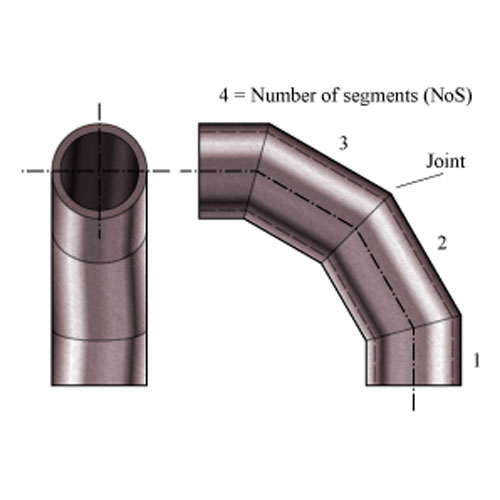
Mitered Pipe Bends are fabricated piping components used to change the direction of a pipe run through one or more miter-cut sections joined by welding. Unlike standard seamless or forged elbows, a miter bend is generally produced by cutting pipe or plate sections at calculated angles and joining them to achieve the required change in direction. This construction makes Mitered Pipe Bends particularly useful for customized piping arrangements, large-diameter piping, low-pressure systems, structural piping, ducting, water systems, and various industrial applications where a fabricated directional change is appropriate. Masiva Metal can support industrial customers looking for fabricated metal and piping solutions according to project-specific requirements.
Mitered Pipe Bends
- Mitered Pipe Bends are fabricated bends designed to change the direction of a piping system.
- They are generally manufactured by cutting pipe sections at predetermined angles.
- The cut sections are aligned and welded together to create the required bend angle.
- A bend can consist of two or more miter sections depending on the design.
- Multiple miter cuts can provide a smoother directional transition than a single sharply angled joint.
- The number of sections depends on the required radius, angle, diameter, pressure conditions, and engineering design.
- Mitered construction can be useful for large-diameter piping where conventional elbows may be less practical or economical.
- These bends can be fabricated according to engineering drawings and project-specific dimensions.
- Material selection depends on operating temperature, pressure, corrosion conditions, and the transported medium.
- Carbon steel, stainless steel, alloy steel, and other suitable materials can be considered for different applications.
- Welding quality is an important part of the manufacturing process.
- Dimensional accuracy is also important to ensure that the finished bend aligns with adjoining piping.
- Mitered Pipe Bends can be supplied with customized angles, dimensions, wall thicknesses, and connection requirements according to the project specification.
- Proper engineering evaluation is essential before selecting mitered construction for pressure-containing piping.
Mitered Pipe Bend
- A Mitered Pipe Bend provides a directional change in a piping system through fabricated and welded pipe sections.
- The bend angle is divided into calculated miter cuts.
- Individual sections are then positioned and welded to form the finished bend.
- The construction method allows considerable flexibility in producing customized angles.
- Mitered Pipe Bend dimensions can be developed according to pipe diameter and project requirements.
- The bend can be fabricated from suitable pipe materials selected for the intended service.
- Wall thickness should be considered according to the piping design.
- The welding process should be appropriate for the selected material.
- Inspection requirements can include dimensional inspection, visual examination, and additional testing where specified.
- Surface treatment may be applied according to the operating environment.
- Fabricated bends can be prepared for welding, flanged, or other connection arrangements according to the design.
- Customers should provide technical drawings and complete specifications when requesting a customized Mitered Pipe Bend.
Miter Bend
- A Miter Bend is a fabricated directional piping component made by joining miter-cut pipe sections.
- It can be designed for different directional changes.
- Common engineering designs may use multiple segments to distribute the change in direction.
- The bend geometry should be established according to the piping layout.
- Pipe diameter, wall thickness, bend angle, number of miters, and joint configuration should be specified.
- Miter Bend fabrication requires accurate cutting and controlled fit-up.
- Weld alignment can influence the dimensional accuracy of the finished component.
- Material compatibility is important when connecting the bend to adjoining piping.
- Miter bends can be suitable for applications where the engineering design permits fabricated directional changes.
- They are often considered for large-diameter systems and customized installations.
- The suitability of a miter bend should always be evaluated against the applicable design code and service conditions.
- Masiva Metal can discuss project-specific requirements for fabricated piping components.
Mitered Bends
- Mitered Bends provide an alternative approach to conventional elbows for suitable piping applications.
- They can be fabricated to project-specific angles and dimensions.
- Multiple segments can be used to create the required bend geometry.
- Fabrication allows the bend to be integrated with specific pipe sizes and wall thicknesses.
- Mitered Bends can be produced from different engineering materials.
- Stainless steel can be considered where corrosion resistance is required.
- Carbon steel can be considered for suitable general industrial applications.
- Alloy steel may be considered for applications requiring particular temperature or mechanical properties.
- Welded joints should be fabricated according to the applicable welding procedure.
- Dimensional inspection can help confirm that the bend matches the engineering drawing.
- Mitered Bends can be used in piping, ducting, water, infrastructure, and industrial applications where their design is appropriate.
- The required number of miter sections should be established by engineering calculations rather than selected solely on appearance.
Miter Bend Manufacturer
- A Miter Bend Manufacturer produces fabricated bends according to engineering drawings, material requirements, dimensions, and applicable specifications.
- Manufacturing begins with reviewing the required bend geometry.
- The pipe or material is selected according to the project specification.
- Cutting dimensions are calculated according to the required angle.
- Sections are cut accurately to achieve the intended geometry.
- Components are fitted together before final welding.
- Welding is performed according to the applicable procedure for the selected material.
- Welded joints can be inspected according to customer requirements.
- Finished dimensions can be checked against approved drawings.
- Surface preparation and coating can be performed when specified.
- Each fabricated component can be marked for identification and traceability.
- A capable Miter Bend Manufacturer should understand material, dimensional, welding, inspection, and documentation requirements.
- Masiva Metal can support customers requiring customized fabricated metal and piping solutions.
Miter Bend Supplier
- A Miter Bend Supplier provides fabricated directional piping components according to project and procurement requirements.
- Industrial buyers may require specific materials, sizes, angles, thicknesses, and connection arrangements.
- Suppliers should be able to understand engineering drawings and technical specifications.
- Customers should communicate the required pipe diameter and bend angle.
- Wall thickness and material grade should also be specified.
- The number of miter sections may need to be defined by the engineering design.
- Inspection and testing requirements should be agreed before production.
- Material certificates may be required for industrial applications.
- Dimensional reports can support project quality documentation.
- Proper packaging is important for protecting fabricated bends during transportation.
- International buyers may also require export documentation and customized packing.
- Masiva Metal can support industrial customers seeking fabricated piping products for international projects.
Steel Mitered Pipe Bends
- Steel Mitered Pipe Bends are fabricated from suitable steel pipe or plate sections.
- Steel provides a range of mechanical properties for different industrial applications.
- Carbon steel can be considered for suitable water, utility, structural, and industrial piping systems.
- Stainless steel can be selected when corrosion resistance is an important requirement.
- Alloy steel can be considered for selected high-temperature or demanding applications.
- The steel grade should match the piping specification.
- Wall thickness should be suitable for the design conditions.
- Welding procedures should be compatible with the selected steel grade.
- Heat treatment requirements should be considered where applicable.
- Surface protection can be applied when required by the environment.
- Steel Mitered Pipe Bends can be fabricated according to customized dimensions.
- Material traceability can help verify that the supplied steel meets the specified requirements.
Stainless Steel Mitered Pipe Bends
- Stainless Steel Mitered Pipe Bends are fabricated directional components used where stainless steel properties are appropriate.
- Stainless steel can provide corrosion resistance in many industrial environments.
- The specific stainless steel grade should be selected based on the process medium and operating conditions.
- Different stainless steel grades have different corrosion, temperature, and mechanical characteristics.
- Fabrication should account for the characteristics of the selected stainless steel.
- Welding procedures should be suitable for the material.
- Proper fit-up helps maintain dimensional accuracy.
- Surface condition can be important in applications requiring clean or corrosion-resistant piping.
- Stainless steel miter bends can be used in water treatment, chemical processing, food processing, pharmaceutical, marine, and industrial applications where suitable.
- Material certificates can provide traceability.
- Finished bends can undergo dimensional and visual inspection according to project requirements.
- Customers should specify the required stainless steel grade when requesting a quotation.
Fabricated Miter Bends
- Fabricated Miter Bends are produced by assembling individually cut sections into a completed directional component.
- Fabrication allows customized bend angles that may not be readily available as standard fittings.
- The design can be adapted to specific pipe diameters.
- Large-diameter piping is one area where fabricated construction may be considered.
- The number of miter sections influences the geometry of the bend.
- Accurate cutting is essential for proper fit-up.
- Weld preparation should follow the applicable fabrication procedure.
- Controlled welding helps maintain joint quality.
- Dimensional checks should be performed after fabrication.
- Surface finishing can be specified depending on the application.
- Fabricated Miter Bends can be produced according to customer drawings.
- Engineering evaluation should confirm whether the fabricated bend is appropriate for the intended service.
Industrial Miter Bends
- Industrial Miter Bends can be used in a range of fabricated piping and industrial systems.
- They may be considered for water pipelines, cooling systems, utility piping, industrial ducting, process systems, and infrastructure.
- Large-diameter applications can benefit from the flexibility of fabricated construction.
- Industrial requirements can involve customized dimensions and unusual directional changes.
- The material should be selected according to the operating environment.
- Pressure and temperature should be considered during design.
- Corrosion conditions should be evaluated.
- Welding requirements should be defined before fabrication.
- Inspection requirements can vary depending on application criticality.
- Surface coating can be considered for suitable environmental conditions.
- Industrial Miter Bends should be manufactured according to the applicable engineering requirements.
- Masiva Metal can work with customer specifications for customized industrial metal components.
Mitered Pipe Bends Manufacturer in Italy & Belgium
- Mitered Pipe Bends Manufacturer in Italy & Belgium is a relevant sourcing term for industrial buyers requiring fabricated directional piping components.
- Italian and Belgian industrial projects may involve chemical, manufacturing, energy, infrastructure, water, and process applications.
- Customers can request customized bend angles and dimensions.
- Material selection can include carbon steel, stainless steel, or other suitable materials.
- Engineering drawings help define the required bend geometry.
- Dimensional accuracy is important for field installation.
- Welding and inspection requirements should be established before production.
- Material documentation can support project traceability.
- Export packaging should be suitable for international transportation.
- Masiva Metal can support customers seeking customized fabricated metal and piping solutions.
Mitered Pipe Bends Supplier in United Arab Emirates (UAE)
- Mitered Pipe Bends Supplier in United Arab Emirates (UAE) is relevant for industrial infrastructure, water, energy, construction, and process projects.
- UAE projects can involve large-diameter piping systems and customized fabricated components.
- Miter bends can be considered where the engineering design permits this type of directional change.
- Customers should provide pipe diameter, wall thickness, angle, material, and connection requirements.
- Corrosion conditions should be considered when selecting the material and surface treatment.
- Welding and inspection requirements should be specified before production.
- Proper packaging is important for international shipment.
- Documentation can include material certificates and inspection records when required.
- Masiva Metal can support UAE customers with customized fabricated piping requirements.
- Final suitability should be established according to the project’s engineering and design requirements.
Mitered Pipe Bends Manufacturer in Spain
- Mitered Pipe Bends Manufacturer in Spain is relevant for industrial customers sourcing customized fabricated bends.
- Miter bends can support suitable piping and infrastructure applications.
- Customers can specify the required angle, diameter, thickness, and material.
- Stainless steel and carbon steel can be considered for suitable service conditions.
- Accurate cutting and fit-up are important to the fabrication process.
- Welding should follow an appropriate procedure.
- Dimensional inspection helps verify the finished bend.
- Material traceability may be required for industrial projects.
- Finished products should be properly protected during transportation.
- Masiva Metal can support international customers requiring customized metal fabrication.
Mitered Pipe Bends Supplier in Germany & South Korea
- Mitered Pipe Bends Supplier in Germany & South Korea can support industrial customers seeking customized piping components.
- Engineering-driven projects may require detailed dimensional and material specifications.
- Customers can provide fabrication drawings to establish the bend configuration.
- The material should be selected according to pressure, temperature, corrosion, and process conditions.
- Weld preparation and joint requirements should be established before manufacturing.
- Inspection requirements should be agreed during procurement.
- Dimensional accuracy is important for connection with adjoining piping.
- Material certificates can support traceability.
- Proper packaging can protect finished fabricated components during international transportation.
- Masiva Metal can discuss customized requirements with industrial buyers in international markets.
Mitered Pipe Bends Manufacturer in Italy
- Mitered Pipe Bends Manufacturer in Italy is a targeted keyword for industrial sourcing of fabricated pipe bends.
- Miter bends can be manufactured according to customer drawings and project specifications.
- Customers can specify bend angle, pipe size, wall thickness, material grade, and connection details.
- Fabricated construction can provide flexibility for customized piping layouts.
- Welding quality is an important consideration.
- Dimensional inspection helps verify the completed assembly.
- Material documentation can support project records.
- Surface treatment can be specified for suitable environments.
- Packaging should protect the fabricated bend during transportation.
- Masiva Metal can support Italian customers with customized industrial piping requirements.
Mitered Pipe Bends Supplier in Belgium
- Mitered Pipe Bends Supplier in Belgium is relevant for companies sourcing customized fabricated piping components.
- Miter bends can be designed for suitable industrial and infrastructure applications.
- Customers should provide detailed specifications for accurate fabrication.
- Material selection depends on service requirements.
- Pipe diameter and wall thickness influence the bend design.
- The number of miter sections should follow the engineering design.
- Welding inspection can be specified according to project requirements.
- Dimensional verification can help ensure field compatibility.
- Export packaging should be selected according to the product dimensions.
- Masiva Metal can support Belgian customers requiring customized fabricated components.
Mitered Pipe Bends Manufacturer in Germany
- Mitered Pipe Bends Manufacturer in Germany is a relevant search term for industrial buyers requiring engineered fabricated bends.
- Customers can submit technical drawings for customized production.
- Bend geometry should be established according to engineering requirements.
- Material selection should consider the operating environment.
- Accurate cutting is essential for consistent assembly.
- Welding procedures should correspond to the selected material.
- Inspection can include visual and dimensional checks.
- Additional testing can be incorporated when required.
- Finished products can be marked for identification.
- Masiva Metal can support international customers with customized fabrication requirements.
Mitered Pipe Bends Supplier in Vietnam & Philippines
- Mitered Pipe Bends Supplier in Vietnam & Philippines can support customers in industrial, construction, water, marine, manufacturing, and infrastructure sectors.
- Customized bends can be manufactured according to project drawings.
- Customers can specify material, diameter, wall thickness, and bend angle.
- Proper fit-up is important for achieving the intended bend geometry.
- Welding should be carried out according to the selected material and applicable procedure.
- Inspection requirements should be communicated before fabrication.
- Material certificates can support project quality requirements.
- Finished bends should be packaged appropriately for international transportation.
- Masiva Metal can support customers seeking fabricated piping products for Vietnam and the Philippines.
- Project-specific requirements should be confirmed before production.
Mitered Pipe Bends Manufacturer in Saudi Arabia & UAE
- Mitered Pipe Bends Manufacturer in Saudi Arabia & UAE is relevant for industrial, infrastructure, water, energy, and construction applications.
- Fabricated bends can be considered for suitable large-diameter piping systems.
- Customers should provide complete technical specifications.
- Material selection should reflect temperature, pressure, corrosion, and process conditions.
- The bend angle and number of miter sections should be based on the engineering design.
- Welding procedures should be appropriate for the selected material.
- Inspection and testing can be specified for the project.
- Surface treatment can be included where required.
- Export packaging is important for international delivery.
- Masiva Metal can support customers requiring customized fabricated piping components.
Miter Bend Supplier in Italy & Belgium
- Miter Bend Supplier in Italy & Belgium can support procurement teams looking for fabricated directional piping components.
- Customers can request bends according to drawings or detailed specifications.
- The required pipe size, wall thickness, bend angle, material, and connection configuration should be provided.
- Customized fabrication can accommodate project-specific geometries.
- Welding quality should be controlled during fabrication.
- Dimensional inspection can verify the completed component.
- Material certification may be required for industrial applications.
- Finished bends can be marked for identification.
- Appropriate packaging can reduce transportation damage.
- Masiva Metal can support international industrial buyers with customized metal fabrication requirements.
Applications of Mitered Pipe Bends
- Water pipelines: Mitered Pipe Bends can be considered for suitable large-diameter water systems.
- Industrial utilities: They can be used for appropriate utility piping layouts.
- Cooling-water systems: Fabricated bends may be incorporated into suitable cooling circuits.
- Chemical facilities: Appropriate corrosion-resistant materials can be selected where required.
- Petrochemical systems: Miter bends may be used where permitted by the applicable piping design.
- Power plants: They can be considered for suitable water, utility, and auxiliary systems.
- Manufacturing plants: Customized bends can help accommodate specialized piping layouts.
- Marine systems: Suitable materials and protective treatments can be specified according to the environment.
- Infrastructure projects: Large-diameter fabricated bends can support customized pipeline routing.
- Industrial ducting: Fabricated mitered sections can be used for appropriate air or gas movement systems.
Advantages of Mitered Pipe Bends
- Customized bend angles can be produced.
- Large diameters can be accommodated through fabrication.
- The design can be adapted to project-specific dimensions.
- Material options can be selected according to service conditions.
- Fabrication can support unusual or non-standard piping configurations.
- The number of miter sections can be designed according to the required geometry.
- Mitered construction can be considered where standard elbows are unsuitable or unavailable.
- Custom wall thicknesses can be specified according to the engineering design.
- Different end configurations can be incorporated where appropriate.
- Fabricated bends can be integrated with other piping components.
- Manufacturing can follow customer drawings.
- Surface finishing and coating can be specified for suitable applications.
Factors to Consider When Selecting Mitered Pipe Bends
- Pipe diameter: The bend must match the connecting pipe size.
- Wall thickness: Thickness should correspond to the piping design.
- Bend angle: The required directional change should be clearly specified.
- Number of miters: Engineering calculations should determine the appropriate segmentation.
- Material grade: The selected material should suit the service conditions.
- Operating pressure: Pressure requirements must be considered before selecting the construction method.
- Operating temperature: Temperature can influence material and welding requirements.
- Corrosion: The process medium and environment should be evaluated.
- Welding: Appropriate welding procedures should be established.
- Inspection: Testing and inspection requirements should be agreed before production.
- Surface treatment: Coating or finishing may be necessary in certain environments.
- Applicable standards: The relevant project codes and specifications should be confirmed.
Mitered Pipe Bend Manufacturing Process
- Engineering review: The required bend geometry and technical specifications are reviewed.
- Material selection: Appropriate pipe or plate material is selected.
- Measurement: Required dimensions and cutting angles are established.
- Cutting: Pipe sections are cut according to calculated miter angles.
- Edge preparation: Weld edges are prepared according to the applicable procedure.
- Fit-up: Individual sections are positioned and aligned.
- Tack welding: Components are temporarily secured.
- Final welding: The miter sections are permanently joined.
- Inspection: Welds and dimensions are checked according to the quality plan.
- Surface treatment: Cleaning, painting, coating, or finishing is performed when specified.
- Marking: The completed bend is identified for traceability.
- Packaging: The component is protected for storage and transportation.
Quality Control for Mitered Pipe Bends
- Verify raw material against the specified material grade.
- Check pipe diameter and wall thickness before fabrication.
- Confirm calculated miter angles.
- Inspect cut surfaces and weld preparation.
- Verify alignment during fit-up.
- Follow the applicable welding procedure.
- Perform visual inspection of completed welds.
- Carry out dimensional inspection after fabrication.
- Check bend angle and overall dimensions.
- Verify connection ends against the project drawing.
- Conduct additional non-destructive testing when specified.
- Maintain material and inspection documentation where required.
- Confirm identification markings before shipment.
- Protect finished components through suitable packaging.
Why Choose Masiva Metal for Mitered Pipe Bends?
- Masiva Metal focuses on industrial metal products and customized fabrication solutions.
- Customers can discuss project-specific requirements for fabricated piping components.
- Customized dimensions can be developed from engineering drawings.
- Material requirements can be communicated according to the intended application.
- Fabrication requirements can include specific angles, diameters, wall thicknesses, and connection arrangements.
- Welding and inspection requirements can be established before production.
- International buyers can communicate packaging and documentation requirements.
- Customized industrial components can be considered for projects requiring non-standard configurations.
- Proper technical specifications help ensure that the fabricated bend matches the intended application.
- Customers should contact Masiva Metal directly for current manufacturing capabilities, available materials, dimensions, certifications, and delivery requirements.
FAQs About Mitered Pipe Bends
What are Mitered Pipe Bends?
Mitered Pipe Bends are fabricated pipe bends made by cutting pipe sections at calculated angles and welding them together to create a directional change.
How are Mitered Pipe Bends manufactured?
They are typically produced by measuring and cutting pipe sections, preparing the weld edges, fitting the sections together, welding the joints, and inspecting the completed bend.
What materials can be used for Mitered Pipe Bends?
Depending on the application, carbon steel, stainless steel, alloy steel, and other suitable materials may be considered.
Are Mitered Pipe Bends suitable for large-diameter piping?
Fabricated miter bends can be considered for large-diameter systems, subject to the applicable engineering design, pressure conditions, and project requirements.
Can the bend angle be customized?
Yes. Miter bends can be fabricated to project-specific directional requirements when the design and applicable standards permit their use.
How many miter sections are required?
The number of sections depends on the bend geometry, angle, diameter, pressure requirements, applicable design criteria, and engineering calculations.
Are Mitered Pipe Bends suitable for high-pressure applications?
Suitability depends on the specific design, material, geometry, welding, pressure conditions, applicable code, and engineering approval. They should not be selected solely based on nominal pipe size or material.
What information is required for a quotation?
Buyers should provide pipe diameter, wall thickness, material grade, bend angle, number of sections if specified, end configuration, quantity, applicable standards, and inspection requirements.
Can Masiva Metal manufacture customized Mitered Pipe Bends?
Customers can discuss customized fabricated piping requirements with Masiva Metal and provide engineering drawings or technical specifications for evaluation.
Where are Mitered Pipe Bends used?
They can be considered for suitable water, industrial, utility, infrastructure, cooling, ducting, marine, and process piping applications.
Conclusion
Mitered Pipe Bends are versatile fabricated piping components that provide directional changes through accurately cut and welded pipe sections. Their ability to accommodate customized angles and large pipe diameters makes them useful for selected industrial and infrastructure applications.
The selection of a Miter Bend Manufacturer or Miter Bend Supplier should consider material quality, fabrication accuracy, cutting precision, welding procedures, dimensional inspection, documentation, and compliance with the applicable engineering requirements. The number of miter sections and the final geometry should be established through appropriate engineering design rather than selected only for manufacturing convenience.
For stainless steel, carbon steel, alloy steel, and other suitable materials, the correct selection depends on pressure, temperature, corrosion, process medium, and project specifications. Buyers should provide complete technical information to ensure that the fabricated bend is designed and manufactured appropriately.
Masiva Metal can support industrial customers requiring customized metal fabrication and piping components. For Mitered Pipe Bends, customers can provide their drawings, dimensions, material requirements, bend angles, quantities, inspection requirements, and delivery specifications for evaluation and quotation.
Contact Masiva Metal today for your customized Mitered Pipe Bend requirements and discuss the material, dimensions, fabrication details, and project specifications with the technical team.